Last updated November 25, 2026
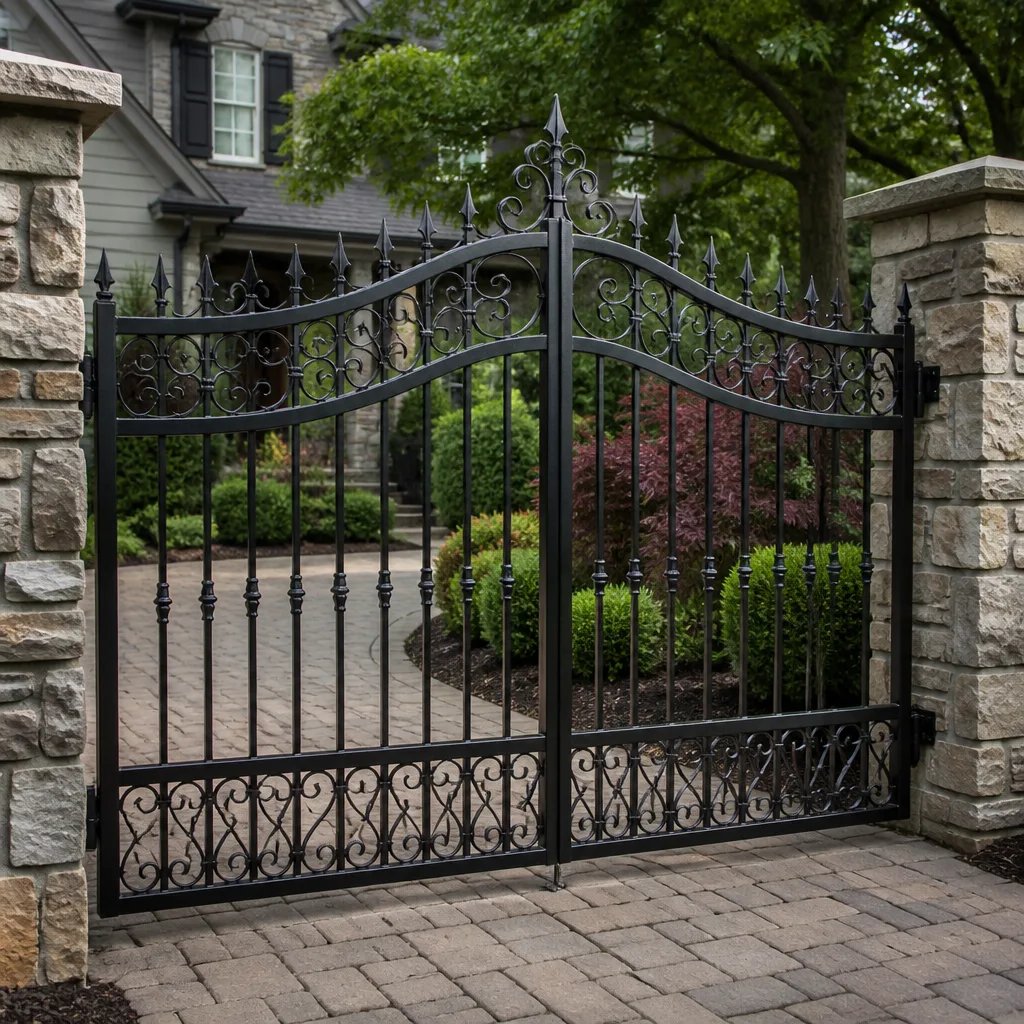 Wrought iron
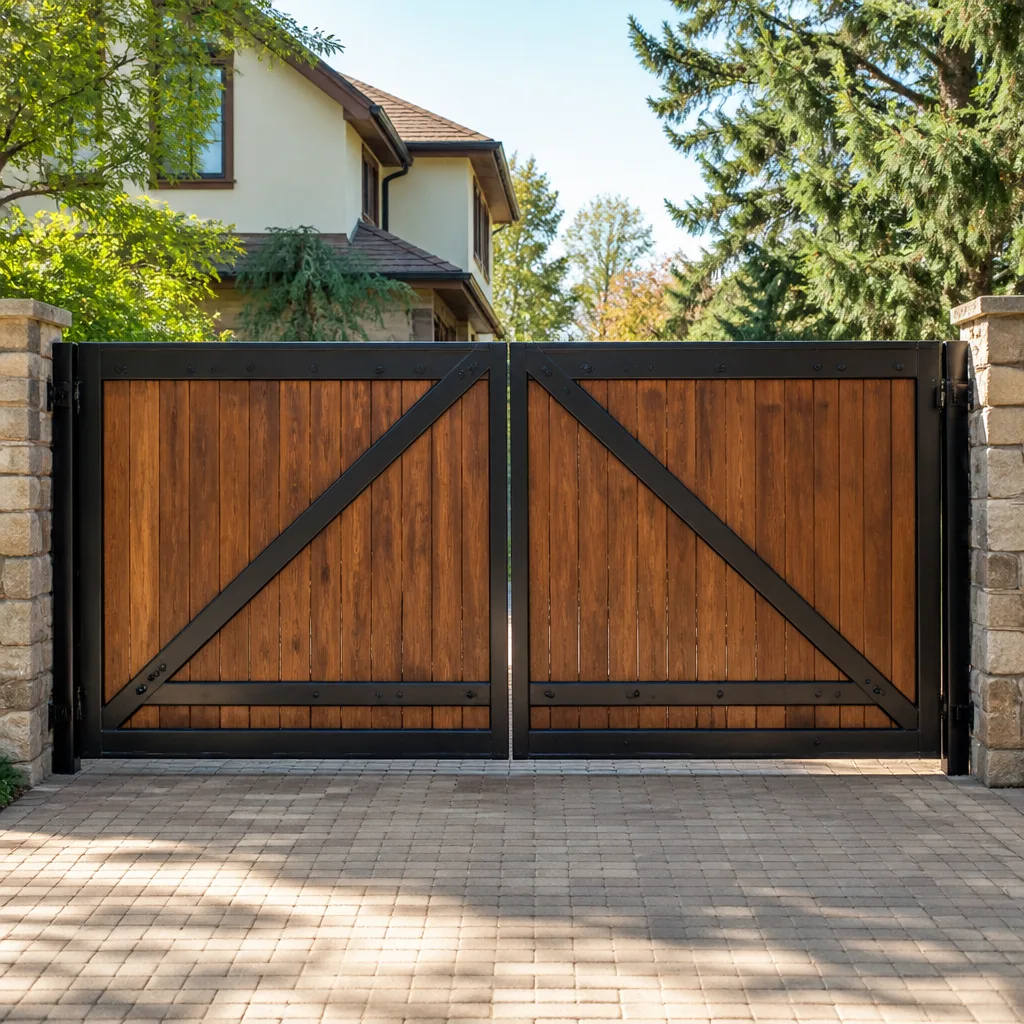 Wood & steel frame
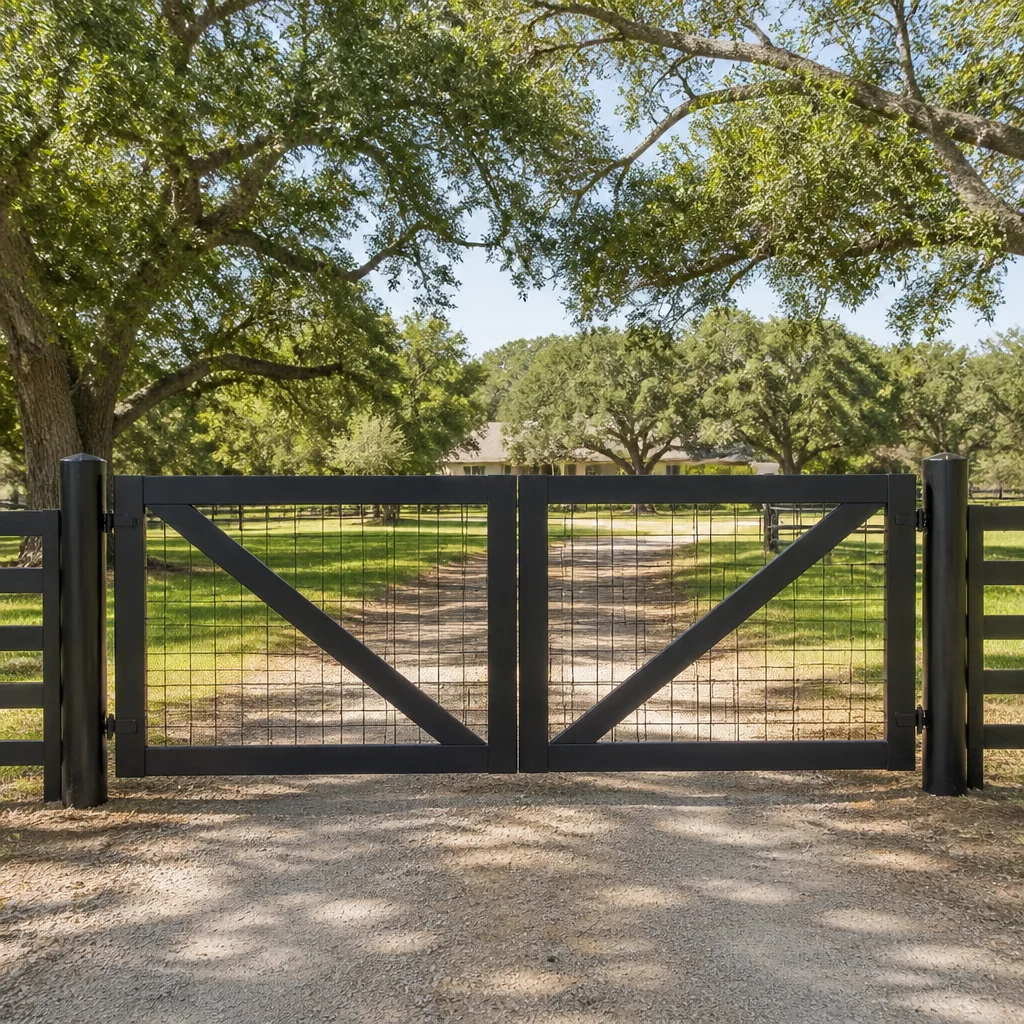 Farm & ranch
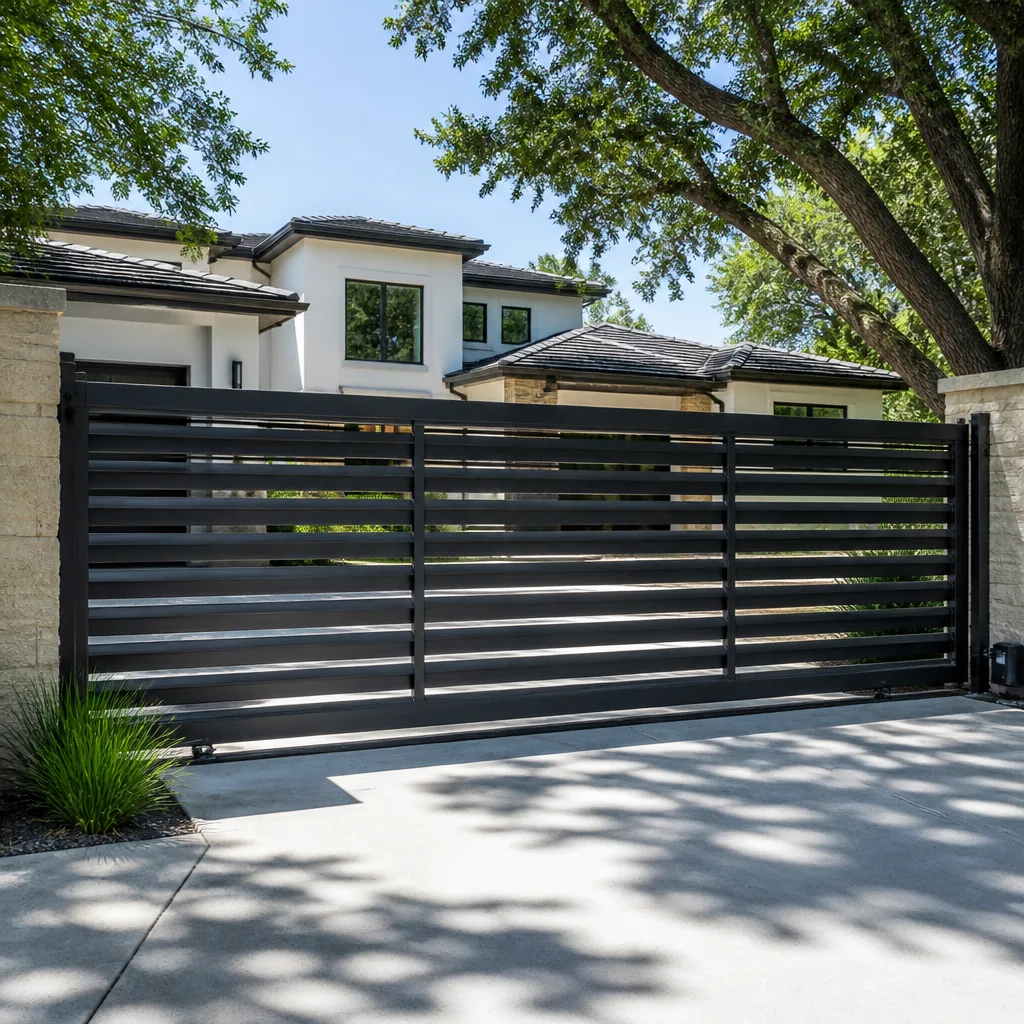 Sliding driveway gates
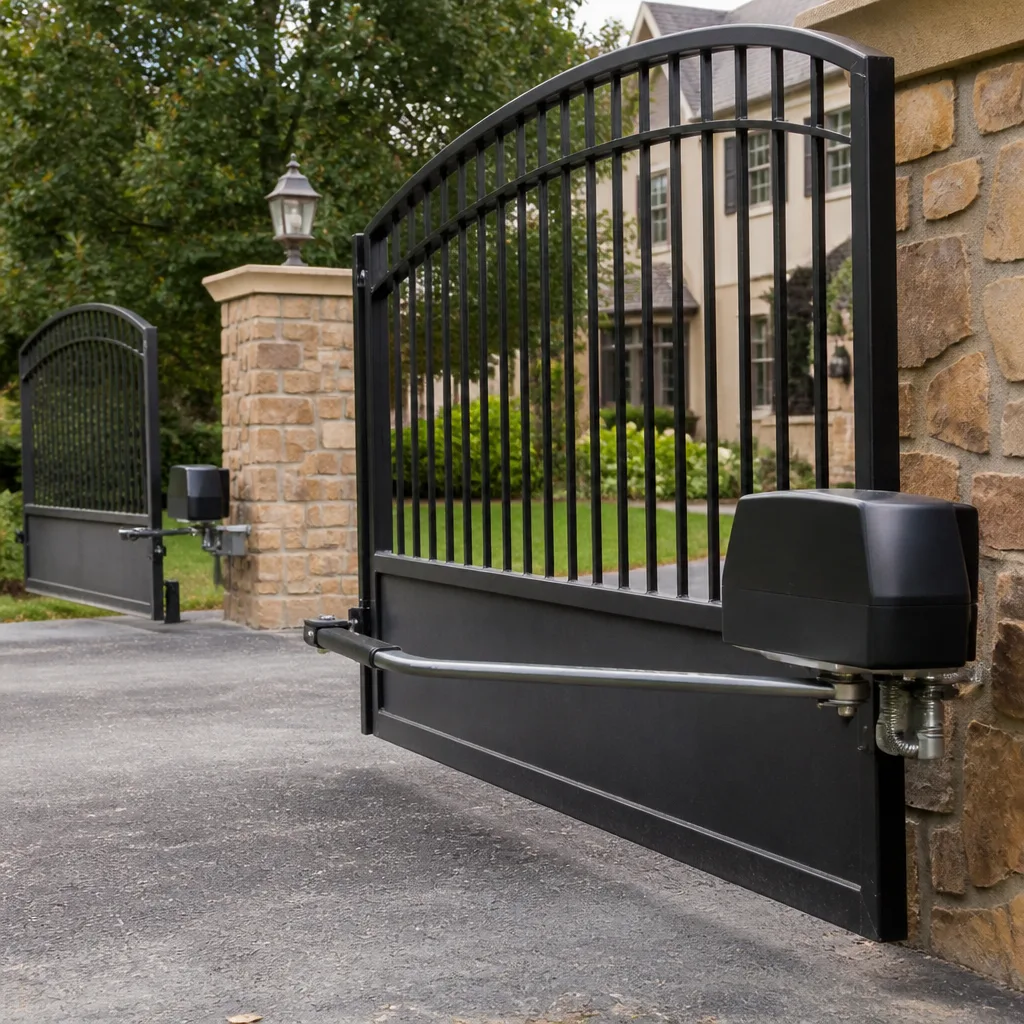 LiftMaster operators
Free on-site gate assessment - hinges, posts, and your LiftMaster or Nice gate operator checked before anything is quoted
The assessment is free and the quote is the invoice.
Get your free estimateSeasonal Gate Repair Care for Northbrook: Year-Round Homeowner’s Guide
Winter doesn’t kill gate batteries. The rapid temperature drop from October to November does. A battery that tested perfectly in September can lose the surge capacity it needs to move a cold, stiff operator by the time the first hard freeze arrives, and most homeowners don’t find out until the gate stops mid-travel. Northbrook sits squarely in a climate that runs four distinct stress cycles across a gate’s mechanical and electronic systems, and each one attacks a different component. This guide maps each season to the specific failure it causes and the exact inspection or action that prevents it, from frost heave in spring to cold-temperature battery derating in winter.
Quick Answer
Seasonal gate care in Northbrook means matching maintenance to the stress cycle each season creates: spring post-shift checks after freeze-thaw heave, summer corrosion control on terminal connections in humid weather, fall clearing of rack-and-pinion tracks before debris overloads the motor, and winter battery load testing before the cold cuts backup capacity. Each season attacks a different component, so a gate that gets only one annual tune-up is still exposed to three seasons of unchecked wear. Matching the inspection to the season is what keeps a residential or commercial gate operating reliably year-round.
Styles & brands we work with
- Wrought iron
- Wood & steel frame
- Farm & ranch
- Sliding driveway gates
- LiftMaster operators
Table of Contents
- Spring: Frost Heave and Swing Gate Geometry
- Summer: Humidity, Corrosion, and Terminal Connections
- Fall: Debris, Rack-and-Pinion, and Motor Overload
- Winter: Battery Backup and Cold-Temperature Derating
- Brand-Specific Seasonal Callouts
- The Northbrook Seasonal Care Calendar
- Commercial and HOA Gate Considerations
- Common Mistakes to Avoid
- When to Call a Professional
Spring: Frost Heave and Swing Gate Geometry
Spring in Northbrook is when frost leaves the ground unevenly, and that uneven release is what moves gate posts. Ground that froze to depth over winter doesn’t thaw at a uniform rate. One side of a swing gate post can rise or settle more than the other, and even a 3mm post shift is enough to throw swing gate geometry out of spec. The gate still opens and closes, so nothing looks broken, but the operator is now fighting misalignment on every cycle and the hinge hardware is taking load it wasn’t designed for.
A post shift shows up in predictable places. Watch for these signals on a swing gate after the thaw:
- The gate leaf sags at the free end or scrapes the ground through part of its arc.
- The operator strains or slows near the fully open or fully closed position.
- The latch no longer lines up cleanly and needs a push to seat.
- The gate leaf drifts out of level along the top rail.
- Hinge plates show fresh gaps or the gate rocks if you push it gently.
Visual inspection is straightforward and doesn’t require opening the operator housing. Stand at the closed position and sight along the top rail. Then open the gate fully and check the same line again. If the gate has moved out of true, or if the free end drags, the post has likely shifted. On slide gates, look at how the gate travels along the track instead: a gate that rides off-center or binds at one point suggests the track has heaved rather than the posts.
Spring is also when we start fielding calls that sound like motor problems but turn out to be geometry problems. A gate motor & opener that runs hot and cuts out after a few cycles this time of year is often just fighting a gate that moved over winter. Diagnosing by component means checking the mechanical alignment before replacing electronics that are working correctly.
For a swing gate operator, spring is also the right time to check that limit positions still trigger cleanly. A post that shifted slightly can move the gate’s open and closed positions relative to the operator’s internal limits, and a switch that used to trip reliably can start hesitating. That hesitation is what leads to overtravel and, eventually, to the gate hitting a hard stop. Catching it in April is far cheaper than catching it in July after the operator has been straining for months.
Summer: Humidity, Corrosion, and Terminal Connections
Chicago-area summer humidity is what corrodes gate electrical systems, and it does it quietly. The visible parts of a gate operator are built to handle weather. The vulnerable points are the terminal connections inside the control box and at the motor, where two dissimilar metals meet and where condensation forms as warm humid air meets cooler interior surfaces. Over a summer, that moisture drives corrosion at the connection points, and a corroded terminal raises resistance. Higher resistance means the control board sees a weaker signal, and the gate starts behaving unpredictably: nuisance faults, intermittent stops, an operator that runs and then won’t respond to the remote.
This is a component-level problem, which is why it deserves a component-level inspection. What matters in summer:
- Terminal screws and spade connectors for visible green or white corrosion.
- Any sign of moisture inside the control enclosure or at the wire entry points.
- Corroded battery terminals, which cause charging faults that mimic a dead battery.
- Aged wire nuts or splices in the low-voltage control wiring, which are prime corrosion points.
- Ground connections, which are often overlooked and often the source of intermittent faults.
The right preventive step is applying dielectric grease at the connection points after cleaning them. Dielectric grease goes on the metal contact surface and over the assembled connection, not on the wire insulation and not on the screw threads. Its job is to seal the metal-to-metal joint so humid air can’t reach it. Applied correctly, it protects a terminal through the whole season. Applied to the wrong surface, it can insulate a connection instead of protecting it, so the application point matters as much as the grease itself.
Summer in Northbrook is also the season when overheating first shows up, because the ambient temperature and the operator’s own heat combine. A gate operator that runs fine in April can hit thermal cutoff in July. On a LiftMaster or Linear residential operator, that cutoff is a protection feature doing its job, so the question is why the operator is running hot. Sometimes it’s binding in the mechanism. Sometimes it’s a failing capacitor or a motor drawing more current than it should. Getting it diagnosed by component in summer prevents a failure that would otherwise hit in the first cold snap.
For commercial properties and HOAs around Northbrook, summer is the heavy-use season and the season when access control hardware takes the most abuse. Keypads, card readers and intercoms on outdoor posts face full sun, humidity and dust. A keypad that starts rejecting codes on a hot afternoon is often a corroded or moisture-compromised contact pad, not a failed control board. Our gate access control work covers keypads, intercoms and loop detectors, so the whole entry system gets checked rather than just the mechanical gate.
Fall: Debris, Rack-and-Pinion, and Motor Overload
On a slide gate, fall debris doesn’t jam the gate before it damages the motor. That’s the part most homeowners miss. Rack-and-pinion slide gates drive along a gear rack mounted to the gate, and the pinion on the operator engages that rack to move the gate. Leaves, twigs, seed pods and grit collect in the track channel and on the rack teeth. The gate keeps running for a while because the motor has enough torque to push through the debris. What actually happens is that every cycle requires more force than the last, and the motor runs hotter and draws more current while the drive components wear faster.
The first sign is usually not a stuck gate. It’s an operator that seems louder, a gate that moves a little slower, or a motor that starts tripping its overload protection on cold mornings. By the time the gate visibly jams, the debris load has been building for weeks and the pinion gear or the motor has taken the wear. Clearing the track before the leaves arrive is the whole point.
A fall track and rack check should cover:
- The full length of the track channel, cleared of leaves, grit and organic matter.
- The rack teeth, cleared of packed debris so the pinion engages cleanly.
- Guide rollers, which collect debris and can bind if they’re not turning freely.
- Drainage around the track, so water doesn’t pool and freeze in the channel in winter.
- The pinion gear on the operator, checked for wear or missing teeth.
On swing gates, fall brings a different debris problem. Hinges and the operator arm’s pivot points collect leaves and grit, and that grit works into the hinge pins and the arm’s bushings. A hinge that was smooth in summer starts to bind, and the operator takes the load. It’s worth greasing the hinge points and the operator arm pivot at the start of fall, and worth checking that the gate still swings freely by hand with the operator disengaged.
Fall is also the right time for a full pre-winter inspection. Getting the gate serviced before the first freeze means problems get found while the weather still allows a comfortable repair. If your gate is due for a full checkup, our gate repair service covers the mechanical, electrical and access control systems together, which is what a proper pre-winter inspection requires. A gate that goes into winter with a clean track, free hinges and a tested battery is a gate that comes out of winter still working.
Winter: Battery Backup and Cold-Temperature Derating
Battery backup capacity drops in cold weather, and it drops faster than most people expect. A battery that’s rated for roughly 50 cycles at room temperature might deliver something closer to 28 cycles at 20°F, because cold slows the battery’s internal chemistry and reduces the surge current it can supply. That matters for a gate operator because the battery isn’t just there for a power outage. It also provides the surge needed to start a motor moving a stiff, cold gate. A marginal battery that tested fine in September can pass a no-load test in November and still fail to move the gate on the first cold morning.
The standard battery test isn’t enough in winter. Checking a battery’s resting voltage tells you it’s charged, not that it can supply surge current under cold conditions. A load test under realistic conditions, or a load test that accounts for cold derating, is what actually predicts whether the battery will carry the gate through February. This is why we test batteries in late fall rather than waiting for a failure.
Cold-temperature battery care for a Northbrook gate comes down to a few specific actions:
- Load test the backup battery before the first hard freeze, not after a failure.
- Check and clean battery terminals, since corrosion raises resistance and compounds cold derating.
- Confirm the charging circuit is actually charging the battery at cold temperatures.
- Replace a battery that’s marginal rather than waiting to see if it fails.
- Keep the operator enclosure free of snow and ice buildup, which insulates it and worsens cold effects.
Winter is also when mechanical stiffness shows up. Cold thickens grease in hinges and slide mechanisms, and a gate that was smooth in October can be noticeably stiff in January. The operator has to work harder to move it, which draws more current and shortens battery runtime on top of the cold derating. Lubricating the moving parts with a cold-appropriate lubricant before winter is a small step that makes a real difference to how much load the operator and battery carry through the season.
Safety matters here, and it’s worth being direct about it. A gate that moves unexpectedly, or that has a failing battery and an unreliable operator, is a physical hazard to people and vehicles. Don’t attempt to disassemble an operator or work around a failing safety device to keep a gate moving through winter. If your gate’s operator or safety edges are behaving unpredictably in cold weather, have a professional diagnose it before someone gets hurt.
Brand-Specific Seasonal Callouts
Brand knowledge matters most in seasonal work because different systems fail differently in the same weather. A generic inspection misses the brand-specific patterns, which is why we approach every seasonal check against the specific system on the gate.
The LiftMaster CSW200UL is a good example. This commercial-grade slide gate operator has a known sensitivity to its cold-weather limit switch behavior, and pre-empting that each November prevents a whole class of winter complaints. As temperatures drop, limit switch contacts can become less reliable, and the operator can misjudge its open or closed position, leading to overtravel or a gate that stops short. A pre-winter check on the limit switches and the operator’s position logic catches this before it becomes a callout in January.
On the residential side, Mighty Mule and Ghost Controls operators are common on Northbrook properties, and both use battery-backed control systems where cold-weather battery condition matters most. A Ghost Controls operator with a weak battery in January can behave like a failed control board. Viking is another brand where we see seasonal issues show up at the control level rather than the mechanical one, and checking the control board’s cold-weather behavior before winter is worth doing.
The larger commercial operators on FAAC, BFT and DoorKing systems need a different seasonal approach because they carry more cycles and heavier loads. A BFT or FAAC slide operator on a busy property builds up mechanical wear faster through the summer, and that wear shows up in winter as sluggish movement and higher current draw. A DoorKing access control system needs its keypad and intercom hardware checked before winter, because moisture in an outdoor keypad freezes and causes contact failures. Linear operators, common in both residential and light commercial settings, tend to show battery and control board issues in the cold, so testing the backup system is the priority.
Since we work across LiftMaster, FAAC, BFT, Linear, Viking, Ghost Controls, DoorKing, Elite and Mighty Mule, the seasonal check adapts to the brand. The seasons are the same for everyone in Northbrook; what changes is which component needs attention first. Diagnosing by component means identifying the brand, understanding where that brand fails seasonally, and checking that specific system rather than running a generic checklist.
The Northbrook Seasonal Care Calendar
A gate gets more from four seasonal checks than from one annual service, because the failure risk shifts every few months. Here’s a practical calendar for a Northbrook gate, residential or commercial:
- Early spring (after the thaw). Check posts and swing gate geometry for frost heave. Sight the top rail, check the free end for sag, confirm hinges are level. On slide gates, check track alignment and that the gate rides centered.
- Late spring. Clean and reassemble electrical terminals with dielectric grease. Check the control enclosure for moisture intrusion. Confirm the operator isn’t running hot.
- Late summer. Recheck terminal connections after the humid months. Inspect access control hardware, keypads and intercoms. Load test the operator and check for thermal cutoff behavior.
- Early fall. Clear rack-and-pinion tracks and rack teeth completely. Grease hinges and operator pivot points. Check rollers and pinion gear for wear. Confirm drainage around the track.
- Late fall (before the first freeze). Load test the backup battery under cold conditions. Clean battery terminals. Confirm the charging circuit. Apply cold-appropriate lubricant to moving parts. Check cold-weather limit switch behavior on the operator.
- Winter. Keep the operator enclosure free of snow and ice. Watch for sluggish movement or reduced cycle count on battery power. Don’t ignore any change in how the gate behaves in the cold.
Northbrook’s climate makes late fall the single most important check of the year, because that’s when everything that held up through summer either does or doesn’t survive the winter. The October-to-November temperature drop is where marginal batteries fail and where mechanical stiffness first appears. A gate that gets a thorough late-fall inspection is a gate that’s genuinely prepared for the cold, rather than one that gets discovered failing in January.
If your gate needs a seasonal check and you’re not sure which system it has, our team at Gate Repair Northbrook can identify the brand and build the right inspection around it. From the motor to the access panel, we check the whole system rather than just the one part that’s making noise right now.
Commercial and HOA Gate Considerations
Commercial and HOA gates face the same four seasonal stress cycles, but at higher cycle counts and with more at stake when a gate goes down. A residential gate that fails is an inconvenience. A commercial gate or an HOA entry gate that fails can block vehicle access, strand residents, or leave a property with an entrance that can’t be secured. The seasonal calendar matters more, not less, when the gate runs hundreds of cycles a day.
For commercial and HOA gates, the seasonal priorities shift:
- Higher wear through summer. More cycles mean faster wear on rack-and-pinion components, hinges and rollers, so fall checks need to look for wear, not just debris.
- Access control criticality. Keypads, intercoms, card readers and loop detectors are the entry system, so a seasonal check on those systems protects access for everyone.
- Battery and backup systems matter more. A commercial gate that loses power and can’t cycle on battery can stop an entire property’s access, so winter battery testing is a priority.
- Safety device verification. Entrapment protection, loop detectors and safety edges need to be checked seasonally, because a gate that behaves unpredictably under load can create liability.
The brand fluency matters more on commercial properties because FAAC, BFT and DoorKing systems are common there and are built differently from residential operators. A BFT or FAAC commercial slide operator has different wear points and diagnostics from a Mighty Mule residential swing operator, and treating them the same way is where generalists get into trouble. We work on the commercial brands as readily as the residential ones, so the seasonal check adapts to the system on the property. If your commercial or HOA gate needs a seasonal inspection, call (855) 701-7091 for a free estimate.
Property managers who run a seasonal schedule on their gates get fewer emergency callouts, because the failure modes a seasonal check prevents are the ones that cause emergencies. The battery that fails on a cold morning, the track that jams after leaf fall, the post that shifts in the thaw: these are all avoidable with a scheduled check. The cost of prevention is far lower than the cost of a gate down on a busy commercial property.
Common Mistakes to Avoid
- Waiting for a failure before servicing. A gate that’s still working isn’t necessarily in good shape. The seasonal check exists to catch the battery that’s about to fail and the track that’s building debris load, not to wait for the gate to stop.
- Testing a battery on resting voltage only. A charged battery that can’t supply cold surge current will pass a voltage test and still fail to move the gate. Load test it before winter, not after.
- Clearing only the visible debris from a slide track. Debris packs into the rack teeth and under the rollers where it’s hard to see. The track needs a full-length clean, including the rack teeth and the area around the rollers. Northbrook’s fall leaf drop makes this essential.
- Applying dielectric grease to the wrong surface. Grease on the wire insulation or the screw threads doesn’t protect the connection and can cause problems. It goes on the metal contact and over the assembled joint.
- Ignoring a post that shifted after the thaw. A 3mm shift might look harmless, but it puts load on the operator and the hinges on every cycle. Fixing the alignment early prevents a motor or hinge failure later.
- Treating every brand the same. A LiftMaster, a Mighty Mule and a DoorKing have different seasonal failure points. A generic checklist misses the brand-specific issues, like the LiftMaster CSW200UL limit switch behavior in cold weather.
- Working on a failing safety device to keep a gate moving. Bypassing or disabling an entrapment protection device on a gate that’s behaving unpredictably is a genuine safety risk. Have a professional diagnose it.
When to Call a Professional
Some seasonal work is within reach of a careful homeowner: a visual inspection after the thaw, clearing leaves from a slide track, checking for obvious corrosion. But several seasonal problems belong with a professional. If your gate has a slow drifts or a latch that won’t line up after spring, call before the operator takes further load. If your operator cuts out in summer heat, have it diagnosed by component rather than replaced by guess. If your battery fails a cold load test, get it replaced properly, with the charging circuit checked at the same time. And if your gate or its safety devices behave unpredictably at any point, stop using it and get it inspected. On a battery or operator-related failure, the local pro we connect you with is licensed and insured as their state requires, and the price is quoted and agreed before any work starts, so there’s no invoice surprise. Gate Repair Northbrook offers free estimates in Northbrook. Call (855) 701-7091 and we’ll identify the brand, diagnose the component, and tell you what the seasonal fix actually needs.
Frequently Asked Questions
The late-fall check is the most important, because it’s the one that prepares the gate for the failures that winter exposes. Load testing the backup battery before the first freeze, cleaning the track, lubricating the moving parts and checking cold-weather limit switch behavior all happen in that window. A gate that goes into winter properly checked avoids the battery failure and cold-weather operator faults that cause most winter callouts in Northbrook.
Cold temperatures reduce a battery’s capacity and its surge current, so a battery that passed a light test in warm weather can fail to move a cold, stiff gate. A battery rated for 50 cycles might deliver closer to 28 at 20°F, and the loss is in the battery’s cold-weather surge, not just its total capacity. Load testing under realistic cold conditions, before the first freeze, catches the marginal battery that a voltage test would miss.
Frost leaves the ground unevenly in spring, and that uneven thaw can shift a gate post by even 3mm. That small shift throws swing gate geometry out of spec. The gate still opens and closes, but the operator and hinges take extra load on every cycle. Sight along the top rail in the closed and open positions; if the gate has moved out of true or drags at the free end, the post has likely shifted.
Fall debris builds up in the rack-and-pinion track before it causes a visible jam. Leaves, grit and twigs pack into the track channel and the rack teeth, and the motor keeps pushing through the debris while drawing more current and wearing faster. A gate that seems louder or slower in fall is often already overloaded. Clearing the full track and rack teeth, including around the rollers, before the leaves arrive prevents it.
Yes. Chicago-area summer humidity causes condensation inside gate operator enclosures, and that moisture corrodes terminal connections where dissimilar metals meet. A corroded terminal raises resistance, and the control board starts seeing weak signals, which causes intermittent faults and unpredictable behavior. Cleaning the terminals and applying dielectric grease at the metal contact points protects the connections through the humid season.
Visual inspection and track clearing are reasonable for a homeowner, but battery load testing, electrical terminal work, operator diagnostics and any safety device service belong with a professional. Working inside an operator enclosure or bypassing a safety device to keep a gate moving is a genuine hazard. If your gate is due for a seasonal check, call (855) 701-7091 for a free estimate and we’ll diagnose it by brand and by component.
The Bottom Line
Northbrook’s four seasons each attack a different part of a gate, and a single annual tune-up only covers one of them. Frost heave tests the posts and geometry in spring, humidity corrodes terminal connections through summer, debris overloads slide gate motors in fall, and cold derating threatens the battery in winter. Matching the inspection to the season is what keeps the whole system reliable. Match each check to the cycle it addresses, load test the battery before the freeze, keep the track clear, and diagnose by brand and by component. Our technicians have up to 12 years of experience, and we work on LiftMaster, FAAC, BFT, Linear, Viking, Ghost Controls, DoorKing, Elite and Mighty Mule systems. Call (855) 701-7091 for a free estimate on any seasonal gate issue in Northbrook.
Written by the team at Gate Repair Northbrook.
See the difference
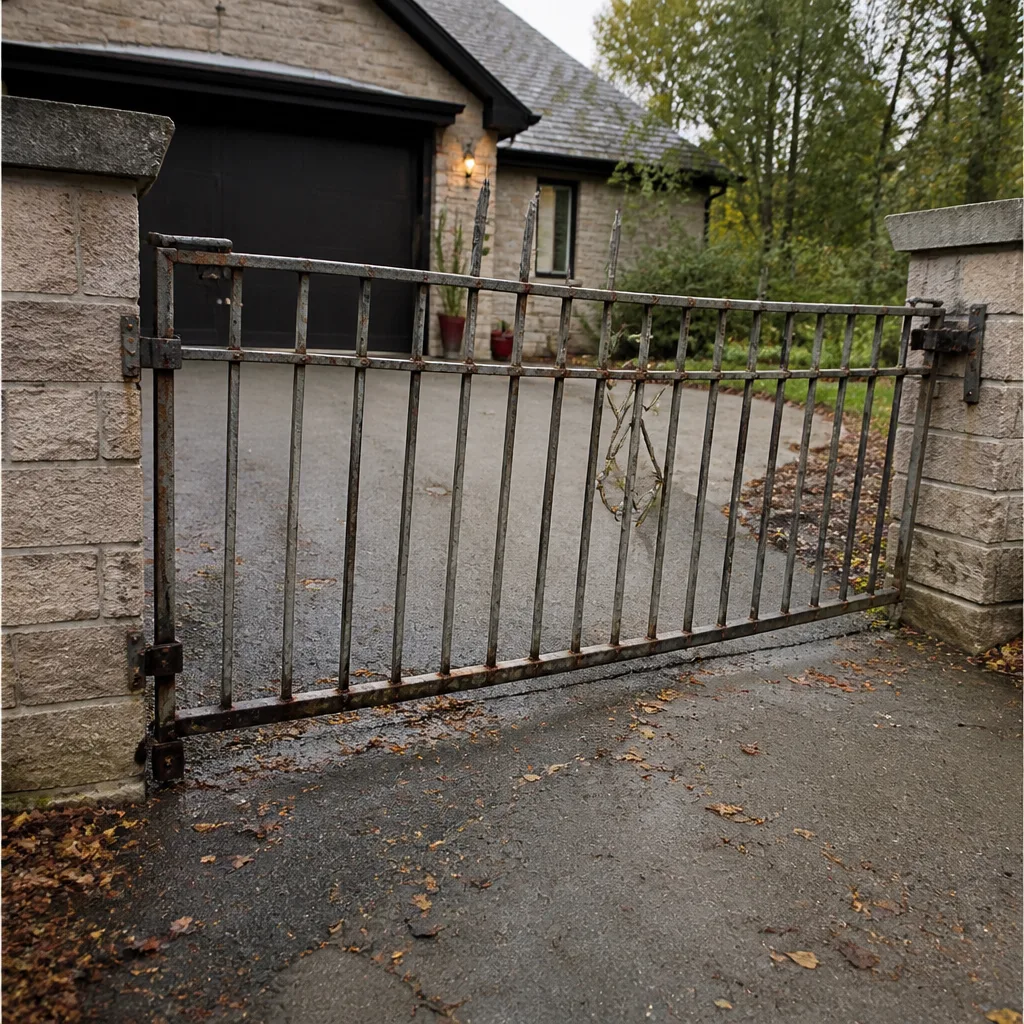 Before
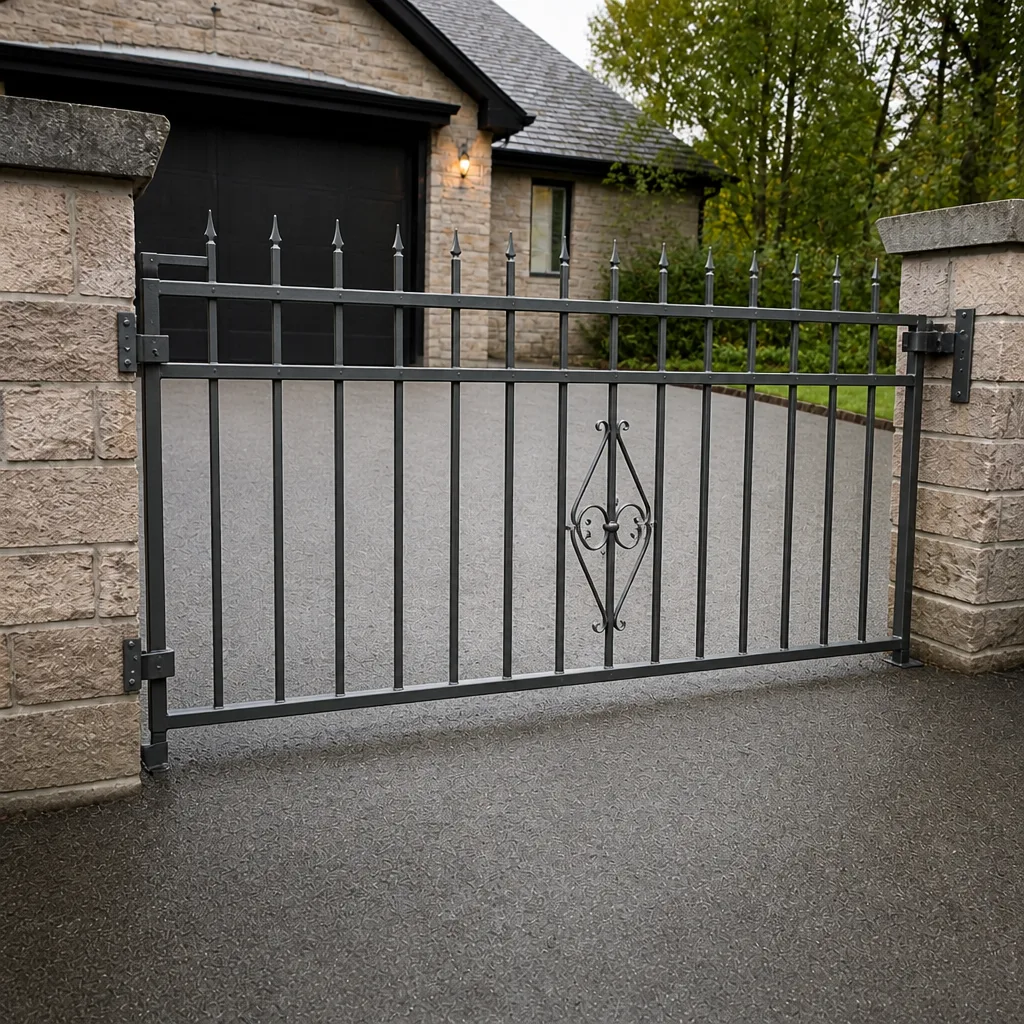 After
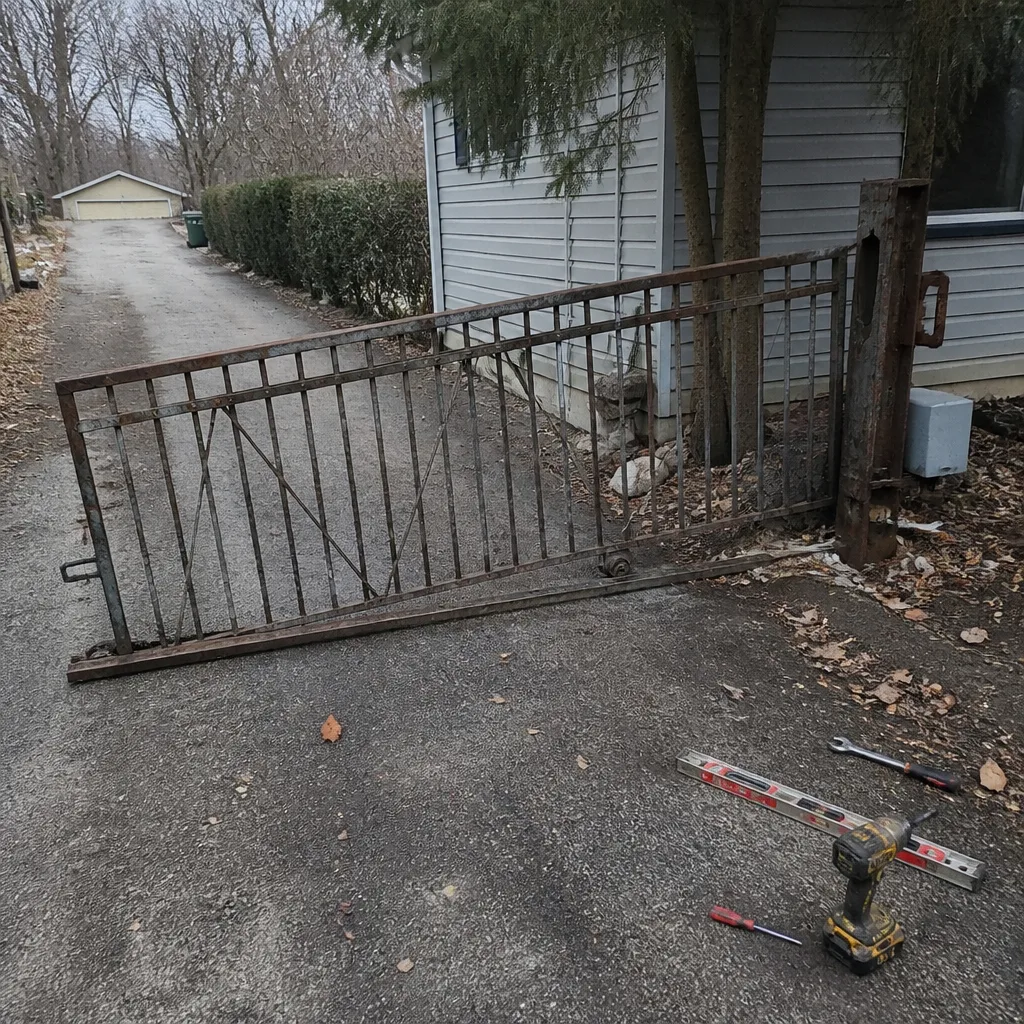 Before
 After
 Before
 After