Last updated November 25, 2026
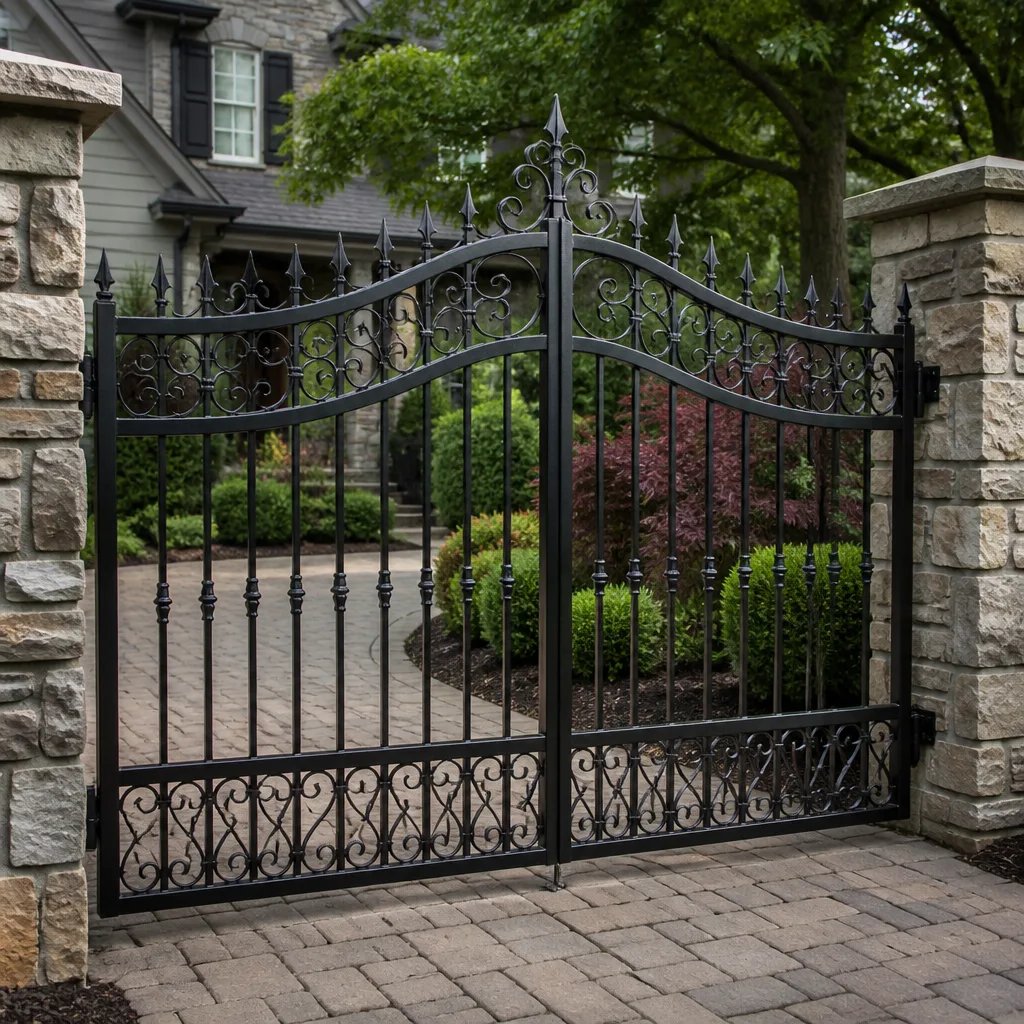 Wrought iron
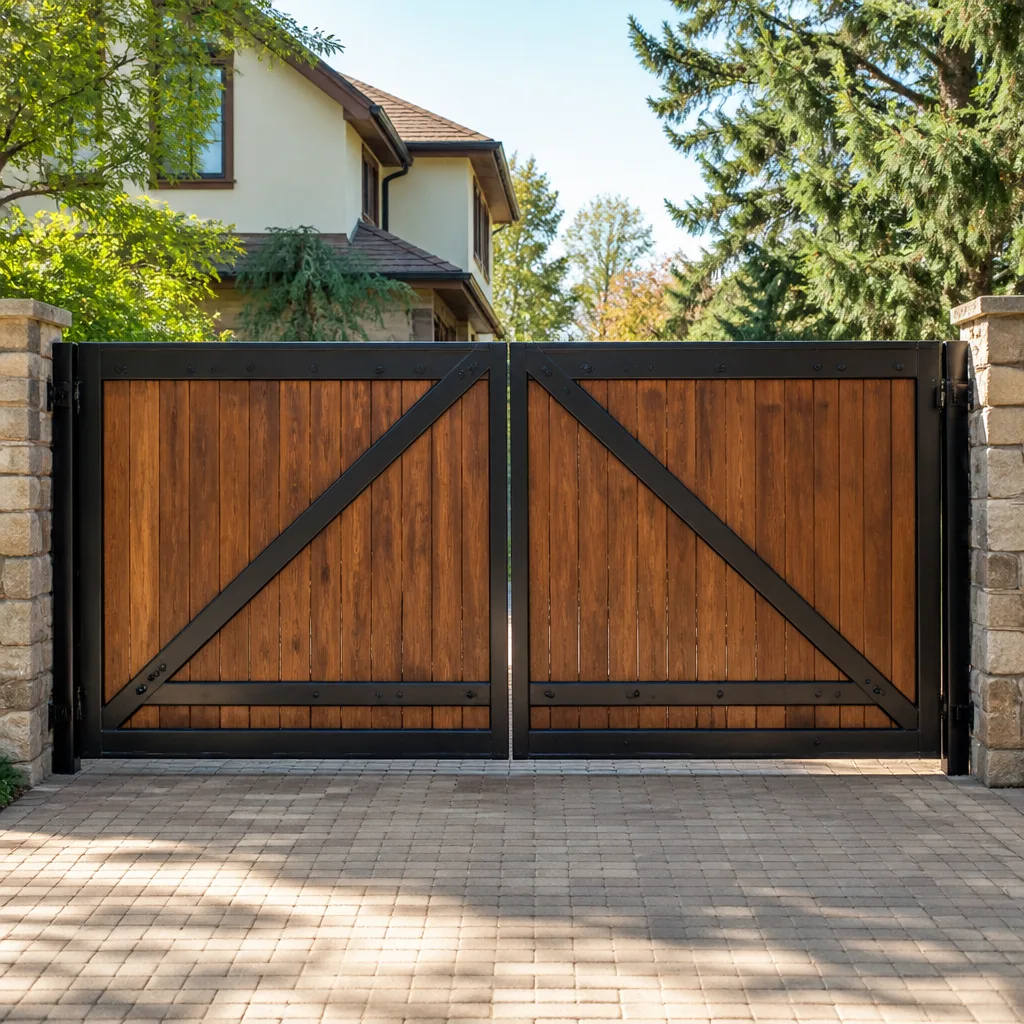 Wood & steel frame
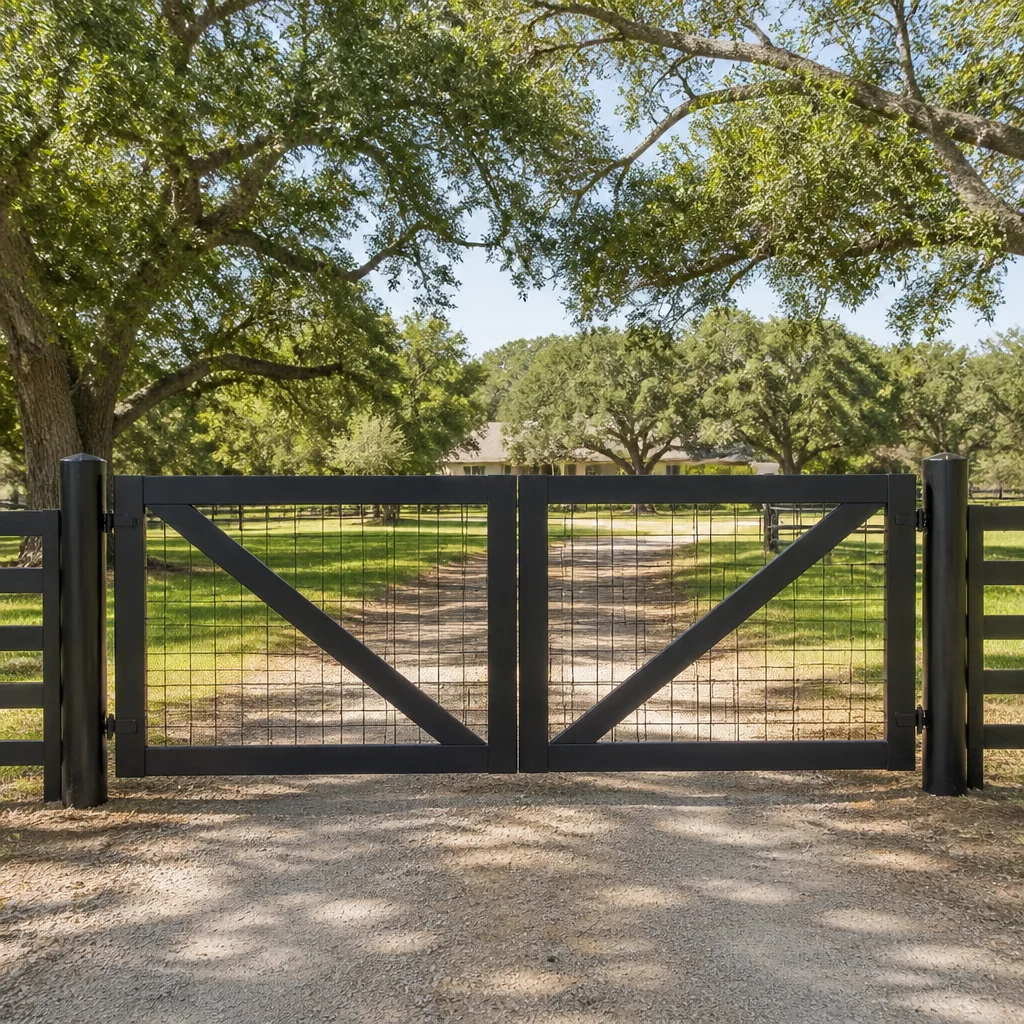 Farm & ranch
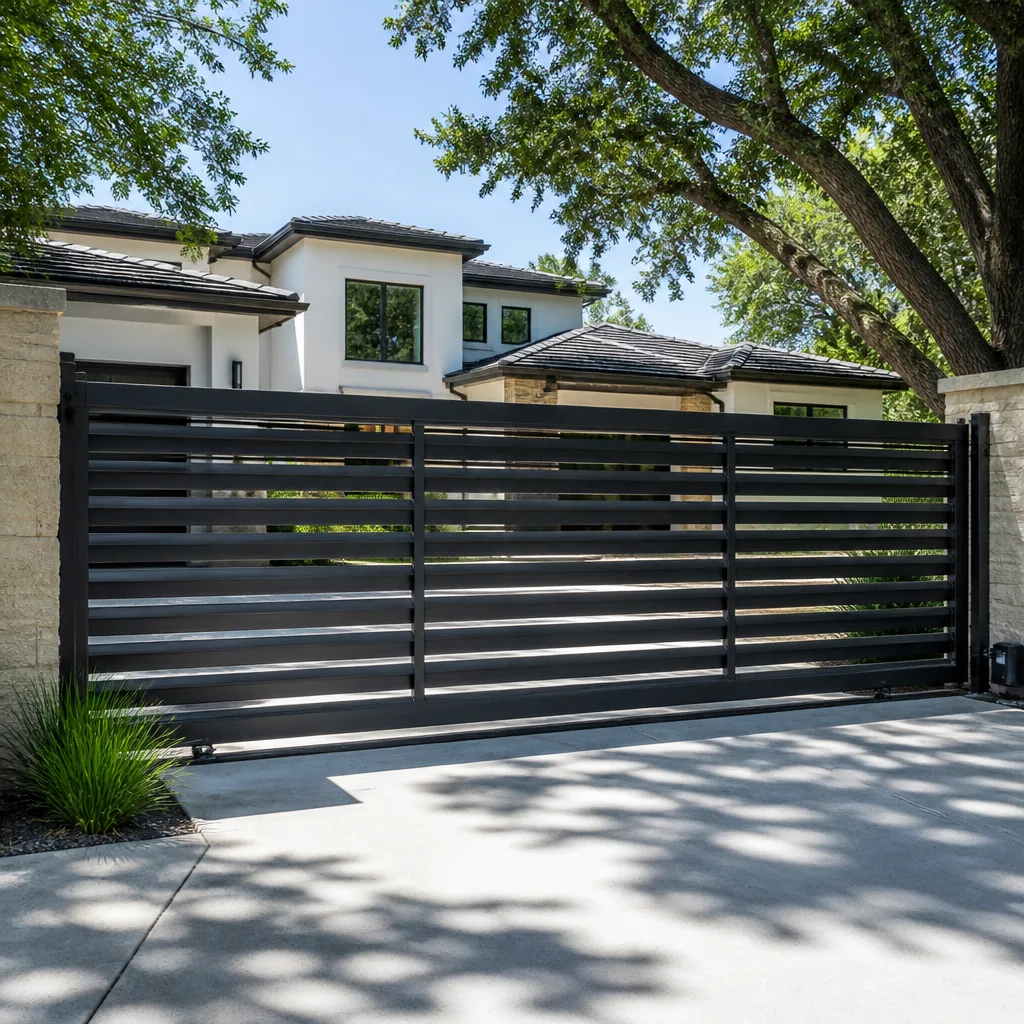 Sliding driveway gates
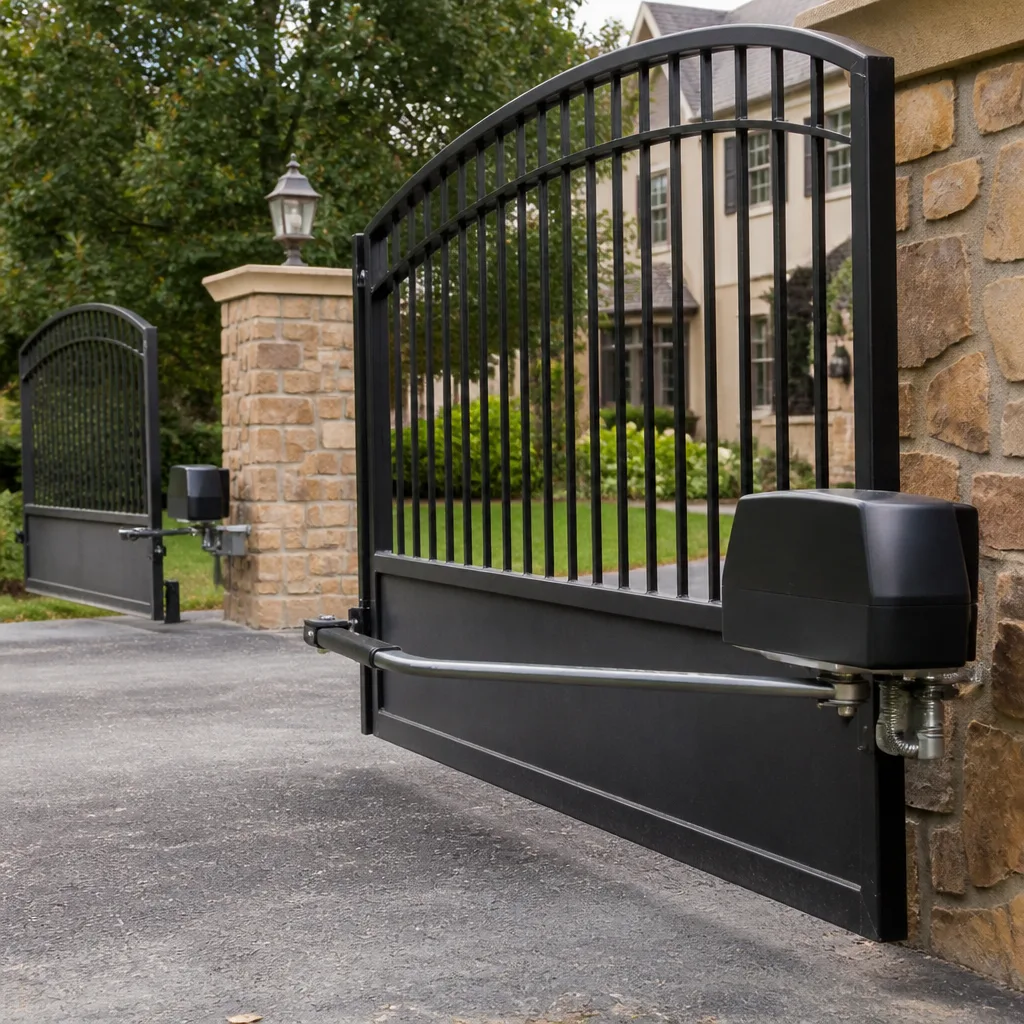 LiftMaster operators
Free on-site gate assessment - hinges, posts, and your LiftMaster or Nice gate operator checked before anything is quoted
The assessment is free and the quote is the invoice.
Get your free estimateGate Repair Warning Signs: A Northbrook Homeowner’s Reference Guide
A gate that hesitates for two seconds before it moves isn’t “getting old.” It’s usually a control board soft-start parameter that’s been corrupted, and it will escalate to a no-start condition, often on the coldest morning of the year. Most gate failures give you 30 to 90 days of warning, but the signals are component-specific, not generic. In Northbrook, where freeze-thaw cycles work on hinges and operator housings all winter, those signals get misread as normal aging all the time. This guide pairs each warning sign to the exact component it implicates, so you can describe your gate’s problem accurately before anyone arrives – and know whether it’s a Saturday-night inconvenience or a call you should make first thing.
Quick Answer
Gate repair warning signs fall into four categories: hesitant or incomplete movement (control board, motor, or limit switch), intermittent operation (radio receiver or antenna cable), unusual noises (rack wear, relay cycling, or capacitor failure), and access control faults (keypad hardware, not codes). A swing gate hinge that shows more than about 2 millimeters of vertical play at the top pivot indicates bearing failure, even before you hear anything. If your gate shows any of these signs for more than a few days, get it diagnosed by component before it fails completely.
Styles & brands we work with
- Wrought iron
- Wood & steel frame
- Farm & ranch
- Sliding driveway gates
- LiftMaster operators
Table of Contents
- Hesitation, Slow Movement, and Incomplete Cycles: Three Symptoms, Three Components
- Why Intermittent Operation Is Almost Never the Motor
- What Each Unusual Noise Tells You About the Failing Part
- Keypad and Access Control Warning Signs
- What to Look For on Swing Gate Hinges Before You Hear Anything
- Slide Gate Signs: Rack, Track, and Roller Wear
- How Northbrook Winters Accelerate Gate Wear
- Why the Brand Matters More Than the Symptom
Hesitation, Slow Movement, and Incomplete Cycles: Three Symptoms, Three Components
These three symptoms sound similar on the phone, and homeowners often use the same words for all of them. They point to completely different parts. Getting the description right on your first call saves time, diagnostic confusion, and usually money.
Hesitation is a pause of one to several seconds between the moment the gate is commanded to move and when it actually starts. On most modern operators, that pause comes from the control board’s soft-start programming, which regulates how gently the motor ramps up. When that parameter corrupts – often after a power surge or a battery voltage drop – the delay stretches and eventually the board stops issuing the start command altogether. A gate that hesitates and then moves normally is still a control board problem, not a motor problem.
Slow movement is a gate that starts normally but moves at visibly reduced speed throughout the cycle. This is usually the motor itself: worn brushes, a tired capacitor, or increased mechanical drag from the gate’s own hardware. The motor is working harder than it should against friction it shouldn’t have. A slow gate that moves at the same slow speed every single cycle is telling you the motor or its drive components are the issue, not the electronics.
Incomplete cycles are a gate that starts, travels partway, and stops – or reverses before reaching the limit. This is almost always a limit switch problem. Limit switches tell the operator where “open” and “closed” are. When a switch is misaligned, dirty, or failing, the gate loses its reference point and either stops short or reverses out of caution. On a LiftMaster or Elite swing operator, limit switch issues are one of the most common service calls we handle in Northbrook.
Here’s how to sort them on a single observation:
- Command the gate to open and time the delay before motion. Two seconds or more of hesitation points to the control board.
- Watch the gate through a full open-close cycle. Uniformly slow movement throughout points to the motor.
- Watch where the gate stops. Consistent stopping at the same partial position points to the limit switch.
Why Intermittent Operation Is Almost Never the Motor
A gate that works perfectly nine times and fails on the tenth is not a motor problem. It’s almost always a radio receiver or antenna cable issue. This is the single most common diagnostic mistake homeowners make before calling us, and it changes the entire service call.
Here’s the logic. A motor is a mechanical device. When it fails, it fails in a pattern tied to work and time – it gets slower, hotter, or noisier. Motors rarely fail “sometimes.” Radio receivers and antenna cables, on the other hand, are electrical and environmental. They fail in ways that depend on the moment: temperature, moisture, interference, the angle of your remote when you press the button, and how far from the receiver you’re standing.
Before you call, run this diagnostic sequence:
- Test the gate with a second remote, freshly programmed if possible. A single failing remote points to the remote, not the gate.
- Test the gate from the keypad or wall station instead of the remote. If the keypad works every time and the remote fails randomly, the problem is in the receiver or the antenna run.
- Note the weather when the gate fails. If it only fails after rain or on very cold mornings, moisture is reaching the receiver housing or antenna connections.
- Look at the antenna wire at the operator. A frayed, chewed, or loose antenna cable drops effective range and creates exactly this “sometimes” symptom. Ghost Controls and Mighty Mule residential installations are especially prone to this because the receivers are external and exposed.
Intermittent failures that only happen in certain weather, at certain distances, or with certain remotes are electronics. Intermittent failures that only happen after heavy cycles are mechanical. Sort by that rule and you’ll be right most of the time.
What Each Unusual Noise Tells You About the Failing Part
Noise is the most useful diagnostic signal a gate gives you, and most homeowners wave it off as “it’s always been a little noisy.” It hasn’t. Each noise source maps to a specific component, and the mapping is consistent across brands.
- Grinding: Rack wear. On a sliding gate, the gear that drives the gate along its rack grinds when the rack teeth are worn, the gear is dry, or the rack has drifted out of alignment. Grinding is a mechanical wear signal and usually means new rack sections or a replacement drive gear. Catching it early can save the operator’s gearbox. Catching it late means both.
- Clicking: Relay cycling. A rhythmic click from inside the operator housing is the control board relay trying to start the motor and failing. On a FAAC or BFT operator, this is a common symptom of a failing relay or a control board that’s losing communication with the motor circuit. A single click when the gate commands to move is normal. Rapid repeated clicking is not.
- Humming without movement: Capacitor failure. The motor hums because it’s receiving power but can’t produce torque to move the gate. On single-phase residential operators, this is the classic capacitor failure symptom. Turn the power off at the breaker and stop trying. Continuing to command a humming gate can cook the motor winding.
- Clunking at the ends of travel: Worn mechanical stops or a soft-stop parameter that’s failing to ramp down. On an Elite or LiftMaster operator with a soft-close setting, clunking means the electronic deceleration has failed and the gate is hitting its physical stops at full speed.
- Squealing or shrieking: Dry hinge bearings on a swing gate, or a dry roller bearing on a slide gate. This one is easy to prevent and expensive to ignore, because metal-on-metal wear accelerates fast.
In Northbrook, the metal contraction that comes with deep winter cold makes already-marginal noises more audible. A gate that clicks only in January is a gate that was starting to fail in October.
Keypad and Access Control Warning Signs
When a keypad entry needs two or three attempts to work, homeowners assume they’ve forgotten the code or someone changed it. They almost never have. Multiple-attempt keypad entries indicate keypad hardware failure, not a code problem.
Access control is a whole subsystem your gate depends on, and it fails in ways specific to access components. On DoorKing and Elite access systems, which we service regularly throughout Northbrook, this shows up as:
- Keys that require pressing harder or pressing twice. The keypad membrane or tactile switches are wearing out. The code is correct; the button just isn’t registering the press.
- Intermittent looping at the loop detector. If your gate free-cycles without a vehicle present, or fails to open for a vehicle that’s clearly on the loop, the loop detector is either tuning out or the loop wire has a partial break. This is common on driveway loops that got nicked by aeration or edging work.
- Intercom calls that come through garbled or not at all. Usually a wiring, power, or handset fault. Sound quality problems are a sign the intercom circuit is degrading, not that the visiting party is pressing the call button wrong.
- Keypad entries that work at warm temperatures but fail cold. In a Northbrook winter, this points to a keypad that’s taking on moisture under the buttons or a battery dropping below its operating voltage. Both are hardware failures you should fix before they strand you outside your gate in February.
If you’re chasing access control symptoms that come and go – keypads, intercoms, loops, transmitters – the component is telling you it’s on its way out. Repairing access control is generally a separate skill set from repairing the gate itself, which is why we treat access control as a distinct diagnostic track rather than an afterthought.
What to Look For on Swing Gate Hinges Before You Hear Anything
Hinges fail before they squeak. That’s the uncomfortable truth. The bearings inside a swing gate hinge wear slowly and silently, and by the time you hear a squeal, the bearing is already trashed and has likely started damaging the pivot post and gate frame around it. You can catch it much earlier with your eyes and a tape measure.
Here’s what to check on a swing gate, briefly and safely, with the gate closed:
- Vertical play at the top hinge. With the gate in the closed position and the operator disengaged, push the top of the gate up gently and watch the hinge gap. More than about 2 millimeters of vertical movement at the top pivot pivot point indicates a bearing that’s failing. Under 1 millimeter is normal.
- Horizontal gap variation between top and bottom hinges. Measure the gap between the gate frame and the post at the top hinge and again at the bottom hinge. If the top gap is significantly larger than the bottom gap (more than 3 or 4 millimeters), the top hinge is sagging and the bearing has lost its load-bearing capacity. That’s the “cracked” hinge – not a cracked casting, but a bearing that’s no longer supporting the gate’s weight.
- Visible rust streak from the hinge down the gate. Rust that runs from a hinge down the paint is a sign of moisture getting into a bearing that’s lost its grease. Once grease is gone, wear accelerates.
- Gate that leans into the opening direction when unlatched. A swing gate that doesn’t rest level when released is a swing gate with an unbalanced hinge. This puts extra stress on the operator and its drive arm and shortens both of their lives.
- Uneven wear on the paint or coating around the hinge pin. A ring of fresh metal shining through the paint at the hinge pin means the pin is moving in the housing. That’s a failure shell.
Bearings on a premium swing operator – a LiftMaster or Elite pivot, for instance – are replaceable. Bearings on a marginal weldment can shear the housing. If you catch it at the 2-millimeter stage, you’re swapping a bearing. If you catch it at the “cracked hinge with visible metal” stage, you’re often replacing the hinge bracket and re-truing the gate frame.
Slide Gate Signs: Rack, Track, and Roller Wear
Sliding gates have their own warning language, different from swing gates. The components that wear are the rack, the ground track, the gate’s own guide rollers, and the drive gear on the operator. Each has a signature symptom.
- The gate walks sideways or climbs its track when cycling. This is a track alignment issue. Either the ground track has shifted, or the guide rollers have worn flat and are letting the gate drift. It will eventually cause a “gate off track” failure, which can stop the gate mid-cycle and leave it stuck partially open.
- Grinding that gets worse at a specific point in the travel. That’s a worn rack section. Racks wear unevenly because most gates start and stop at the same place, so the section near the closed position takes most of the wear. If you hear grinding only near one end of the gate travel, that’s the section to replace.
- Gate motor strains at cold temperatures. A slide gate operator that works fine in summer but trips out repeatedly in winter is usually fighting track and roller friction. Cold-thickened grease and metal contraction both add drag, and the operator’s overload detection protects itself by shutting down. If your gate works well in July and stutters in January, the operator isn’t failing – the mechanical hardware under it is.
- Repeated safety reversal on the safety edges. A slide gate that reverses for no apparent reason mid-travel often has a safety edge or obstruction sensor that’s misreading. That’s an electrical fault, not a mechanical one, and should be diagnosed before you do anything else. A gate with a malfunctioning safety edge is a gate that might not see a person, a pet, or a car in its path.
Be careful with the electrical and safety edge side of this work. Gate operators run on line voltage, and the internal control board holds stored energy even when the gate appears dead. If it’s not a simple visual check, this is a job for a technician, not a DIY afternoon.
How Northbrook Winters Accelerate Gate Wear
Gate hardware in Northbrook leads a harder life than gate hardware in a milder climate, and it shows up as faster wear on the same parts. The specific mechanisms are worth understanding because they change what “normal” wear looks like here.
Freeze-thaw cycles are the big one. Water works its way into hinge gaps, roller bearings, and the crevices around rack mounting bolts during fall rain, then freezes overnight and expands. Expansion fractures the grease seal and opens the metal. Then it thaws, water gets deeper, and the cycle repeats. Over a single Northbrook winter, this drives bearing and rack wear at a rate you wouldn’t see anywhere without hard freezes.
Deep cold also changes the mechanical equation. Metal contracts, which loosens previously tight fits. Grease thickens, which raises motor drag. Battery voltage in solar or battery-backup operators drops, which shortens runtimes and can corrupt the control board’s soft-start parameter – which is exactly the hesitation symptom we opened this guide with. If your gate hesitates on the coldest morning of the year, that’s not a coincidence. It’s the mechanism.
And there’s the expansion side of spring thaw. Ground heaves from frost move ground tracks and driveway-mounted loops. It’s in April, not January, that many Northbrook slide gates suddenly start walking off their tracks or failing to detect vehicles. If your gate worked all winter and started acting up in spring, that’s frost movement, not a new failure.
Why the Brand Matters More Than the Symptom
Two gates that hesitate identically are not necessarily the same problem. The brand and model of the operator changes which component is most likely failing, and it changes how the fix is approached. This is the reason we ask for your brand before we ask for your symptom.
A LiftMaster residential swing operator rarely fails at the receiver first; its receiver is integrated and its control board soft-start is the more common hesitation culprit. A Mighty Mule residential unit tends to fail at the antenna and external receiver, which is exactly the intermittent-operation pattern we covered above. Ghost Controls installations in Northbrook often throw “sometimes” symptoms because of their exposed hardware on swing gates and exterior wiring runs subjected to cold-weather moisture. A FAAC or BFT commercial-grade operator with high cycle counts puts more wear on the gearbox and relay than on the receiver. And a DoorKing or Elite access system calls for attention to the keypad and intercom side before anything mechanical.
This is where gate specialists and generalists diverge. A generalist reads the symptom and replaces the most likely generic part. A technician working across the nine major gate brands – LiftMaster, FAAC, BFT, Linear, Viking, Ghost Controls, DoorKing, Elite, and Mighty Mule – reads the brand, reads the symptom, and identifies the failing component before opening anything. Diagnosed by component, not by guess, is how a warning sign turns into a proper repair instead of a parts-swapping exercise.
If you’re not sure which brand your gate uses, the operator housing usually has a plate or sticker with the make and model. Take a photo and mention it when you call. That single piece of information usually cuts a diagnostic visit in half.
Common Mistakes to Avoid
- Assuming a hesitant gate just needs to warm up. Waiting for the “cold morning” behavior to clear on its own usually means the control board finishes corrupting itself and the gate won’t start at all. Call when the hesitation appears, not after the failure.
- Continuing to command a humming gate. A gate that hums without moving is draining current through a motor that can’t turn. Every extra attempt heats the winding. Turn it off at the breaker and call.
- Ignoring one failed keypad entry as user error. A single extra attempt is nothing. Two attempts, consistently, is a keypad on its way out. In a Northbrook winter, that keypad will fail harder, not softer.
- Replacing remotes before testing the receiver. Buying a new remote to solve “sometimes” operation is the most common waste of money in gate repair. Test the keypad first. If the keypad works every time, the problem is in the receiver, the antenna, or the remote – not the motor.
- Treating a grind near the end of travel as normal chatter. Rack wear concentrates where the gate starts and stops. Grinding near one end of gate travel is the rack telling you which section to replace, and it’s the cheapest repair to catch early.
- Hosing down the operator housing and hinges in spring. It feels tidy. It drives water into the exact bearing and connector surfaces that struggled through winter. If you want to clean a gate, clean the panels. Leave the mechanism dry.
- Waiting for a visible hinge failure before replacing a bearing. A hinge bearing at 2 millimeters of vertical play is a bearing replacement. At 5 millimeters, it’s often a hinge bracket replacement, a frame truing, and an operator service on top. Catch it early.
See the difference
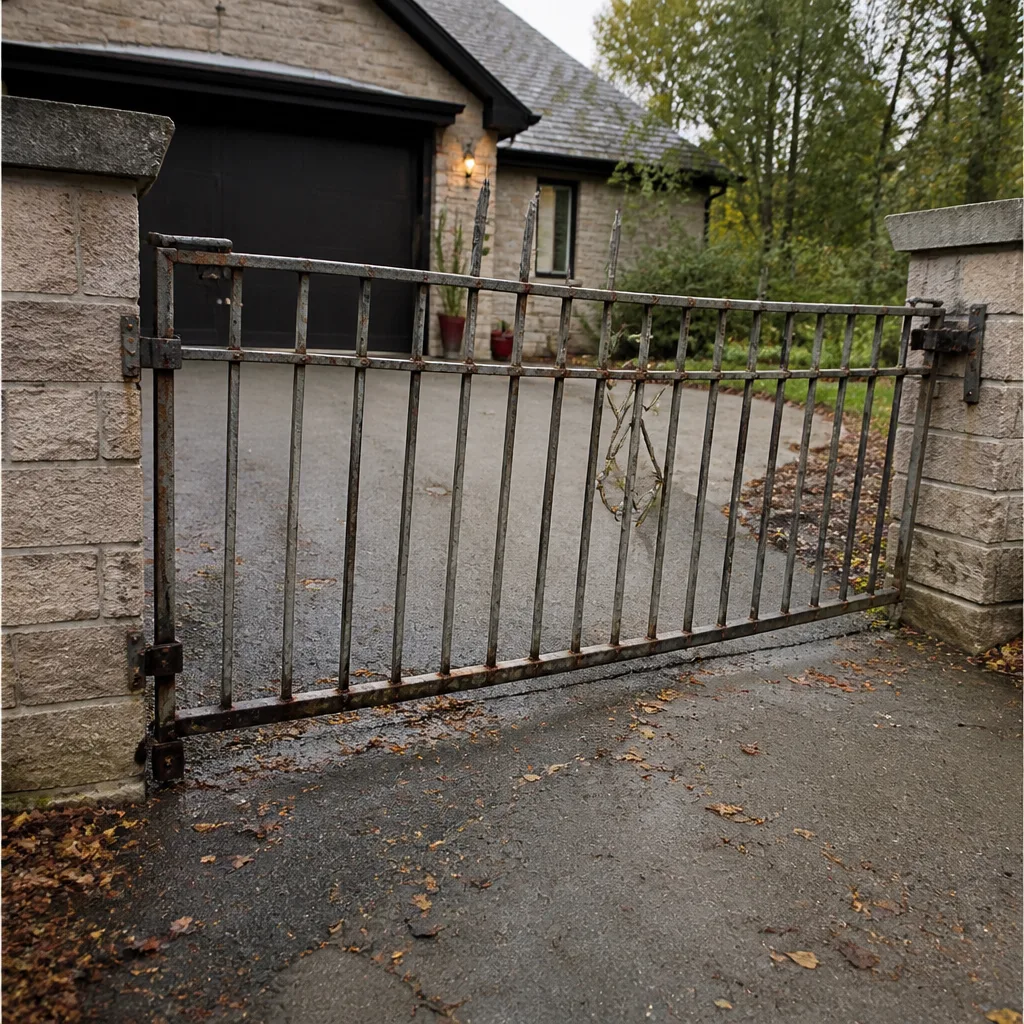 Before
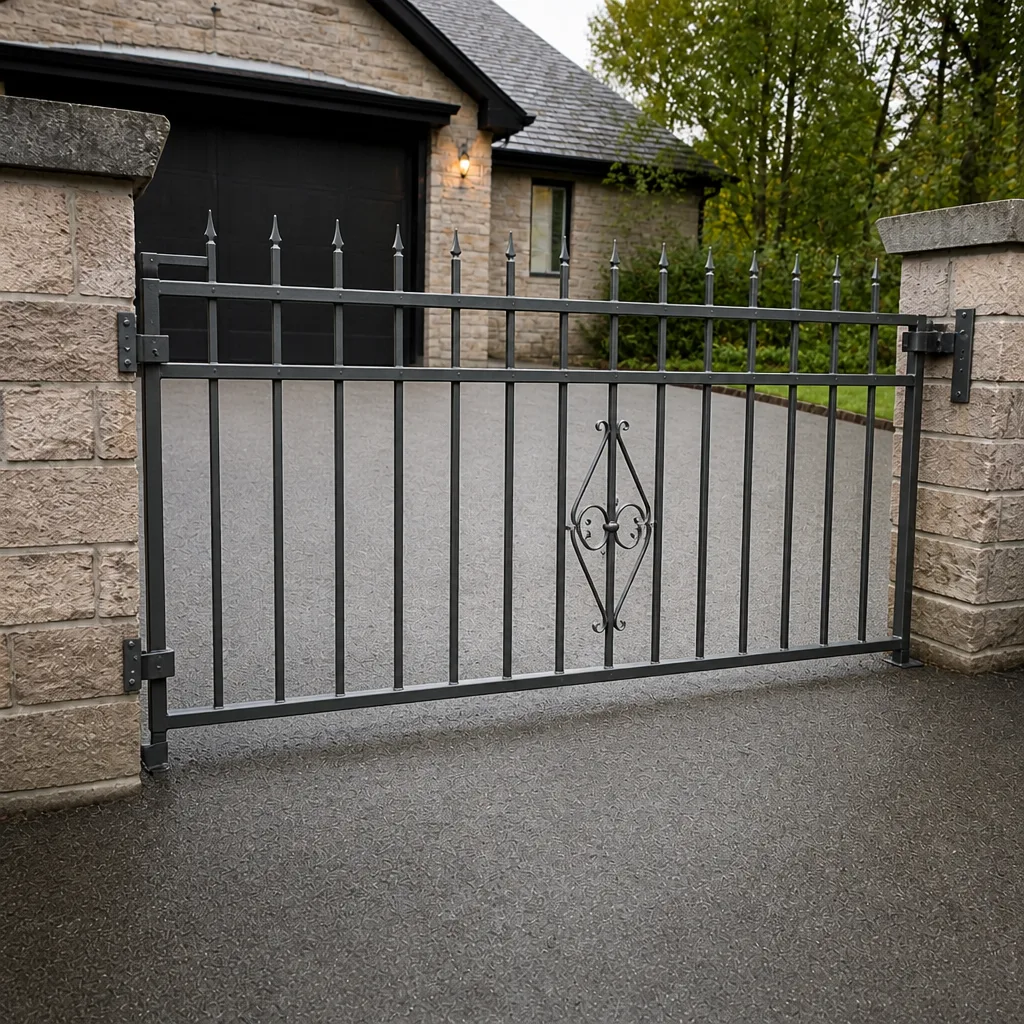 After
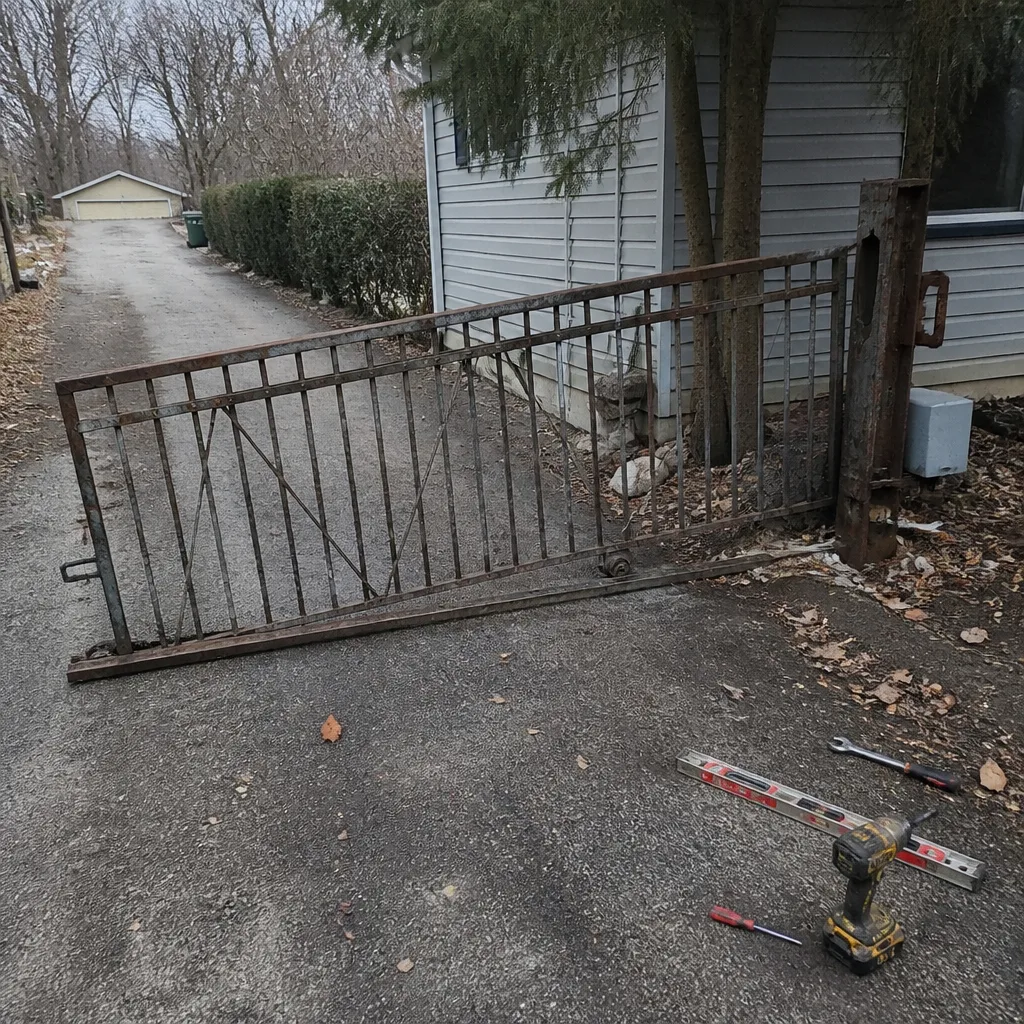 Before
 After
 Before
 After
When to Call a Professional
Check the gate yourself for hesitation, slow movement, incomplete cycles, unusual noises, and keypad reliability. If any symptom appears for more than a couple of days, or repeats after a reset, that’s the point to call. For any sign that touches the motor, the control board, the access control wiring, or the safety edges on a slide gate, call a technician rather than diagnosing further – the internal electrical work on a gate operator is dangerous and requires training and proper tools. A swing gate with 2 millimeters of vertical hinge play, a slide gate that walks its track, a keypad that needs two presses, a gate that hums but doesn’t move – each of these is a “call now” sign, not a “call eventually” sign. For the broader service picture, see gate repair to understand the full range of what we handle. Gate Repair Northbrook offers free estimates in Northbrook – call (855) 701-7091. Our technicians have up to 12 years of experience, and they diagnose by component, not by guess.
Frequently Asked Questions
Hesitation before movement is usually the first warning sign of a failing gate operator. A delay of one to two seconds between the command and the motion means the control board’s soft-start parameter is degrading. If left alone, it progresses to a no-start condition, often on the coldest day of the year. Call (855) 701-7091 for a free estimate while the gate still moves.
Random, intermittent failure is almost always a radio receiver or antenna cable issue, not a motor problem. Test your keypad first. If the keypad works reliably and the remote only works sometimes, the receiver, antenna, or remote is failing – not the motor. Call (855) 701-7091 to diagnose it before you buy a replacement motor you probably don’t need.
Yes, and you should stop commanding it immediately. A humming gate with no movement usually points to a failed start capacitor on a single-phase operator, but continuing to command the gate heats the motor winding and can turn a capacitor replacement into a motor replacement. Turn the power off at the breaker and call (855) 701-7091.
Gate repair pricing in Northbrook depends on the component, the brand, and the access system – a control board replacement, a motor and opener job, and a keypad repair are all different line items. Every job is quoted and agreed before any work starts, and the written estimate sets the final price. Call (855) 701-7091 for an exact quote – estimates are free.
Multiple-attempt keypad entries indicate keypad hardware failure, not a code problem. The membrane or tactile switches are wearing out, and the code is correct – the buttons just aren’t registering every press reliably. Call (855) 701-7091 to have the keypad diagnosed before it fails entirely.
Winter-only symptoms on a swing gate usually point to cold-thickened grease, contracted hinge play, or a bearing that’s lost its grease but hasn’t yet failed visibly. In Northbrook, the same freeze-thaw cycles that crack hinge bearings also make marginal ones more audible. This is the best time to service it, before spring thaw turns a minor bearing into a hinge bracket replacement. Call (855) 701-7091 for a free estimate.
The Bottom Line
Gate failures come with 30 to 90 days of warning, and every one of those warnings is component-specific: hesitation belongs to the control board, slow movement belongs to the motor, incomplete cycles belong to the limit switch, random failures belong to the receiver or antenna, and every non-generic noise tells you which mechanical part is on its way out. Keypads that need two presses are hardware failures, and hinge bearings fail visibly before they squeal. If you catch the signs in Northbrook at the right stage, you replace a bearing instead of a gate frame. Gate Repair Northbrook works on your brand – Elite, Mighty Mule, LiftMaster, FAAC, and the rest – from the motor to the access panel, diagnosed by component, not by guess. When a warning sign turns into a problem, gate motor & opener service and gate access control work are handled by the same specialist team. Call (855) 701-7091 for a free estimate, and if your gate fails completely, start at our Gate Repair Northbrook homepage for the fastest route to help.
Written by the team at Gate Repair Northbrook.