Last updated November 25, 2026
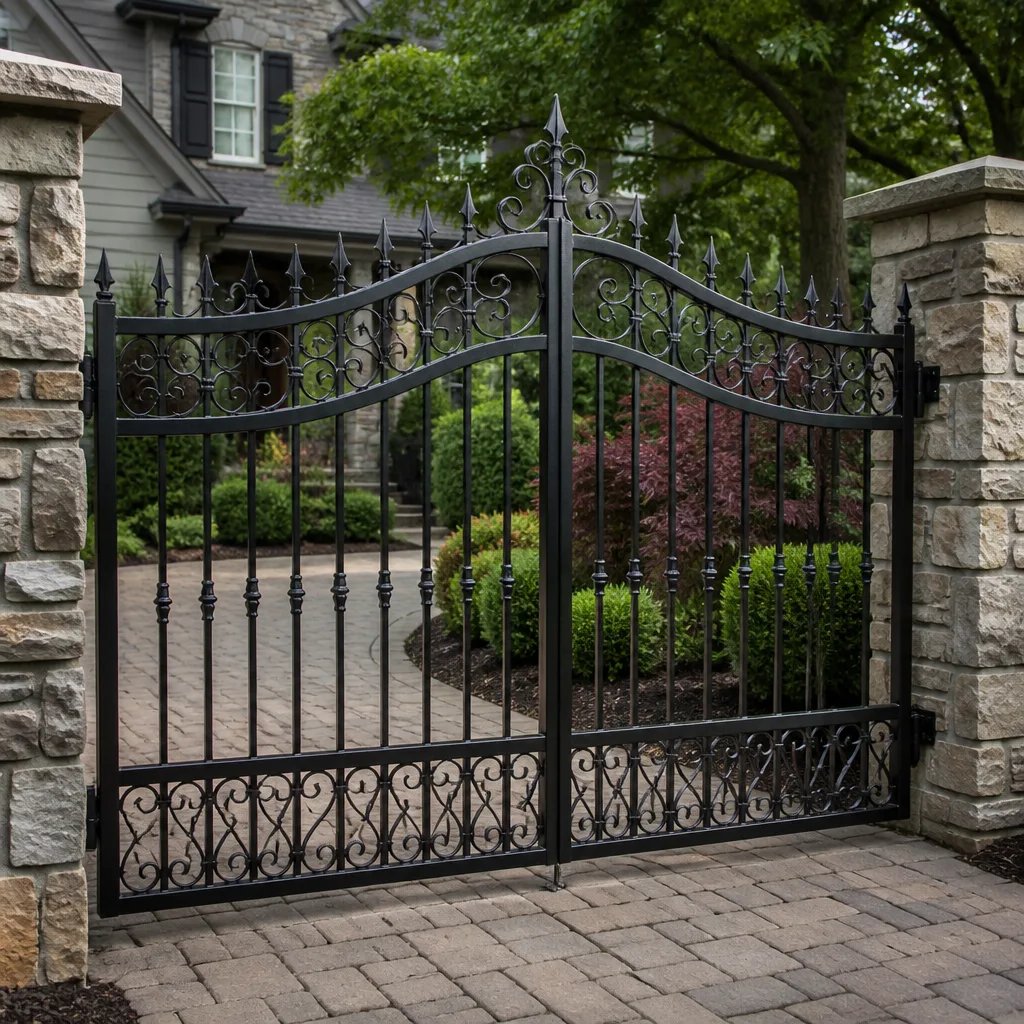 Wrought iron
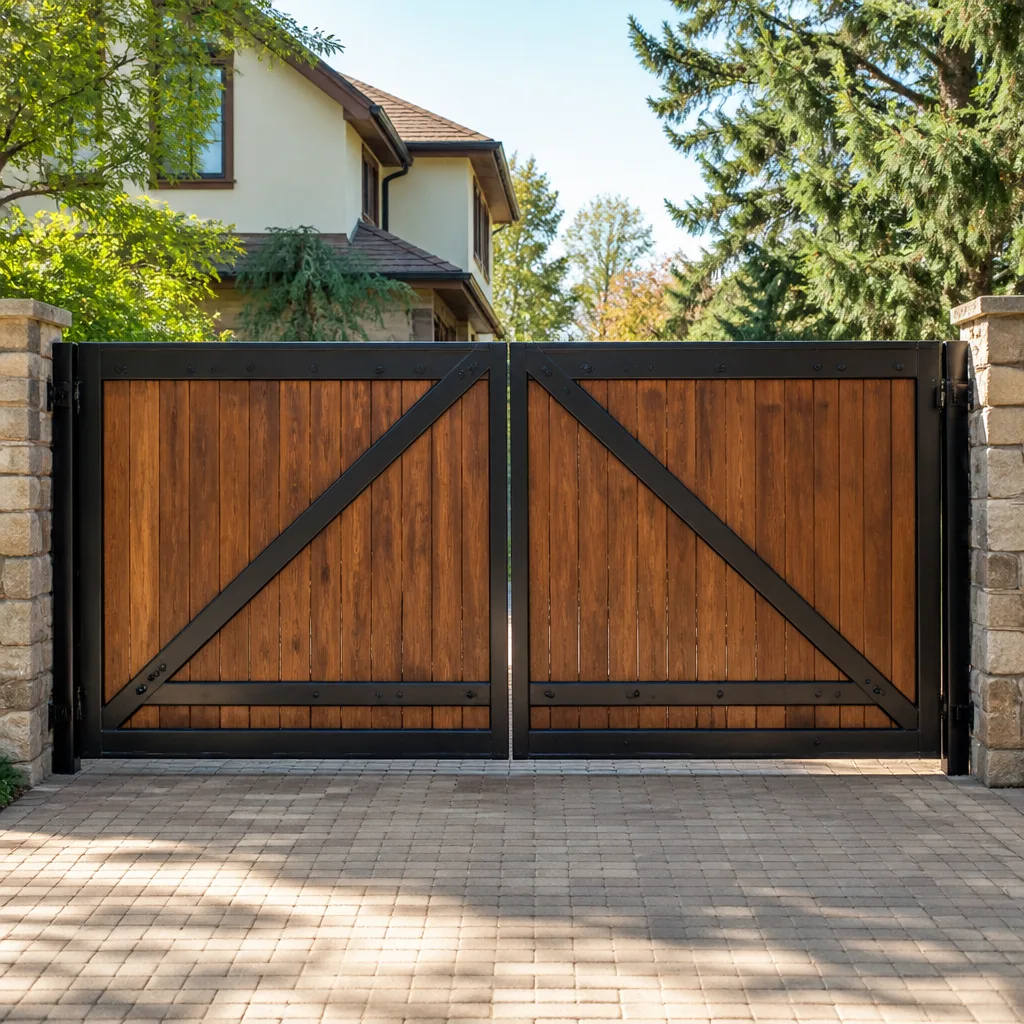 Wood & steel frame
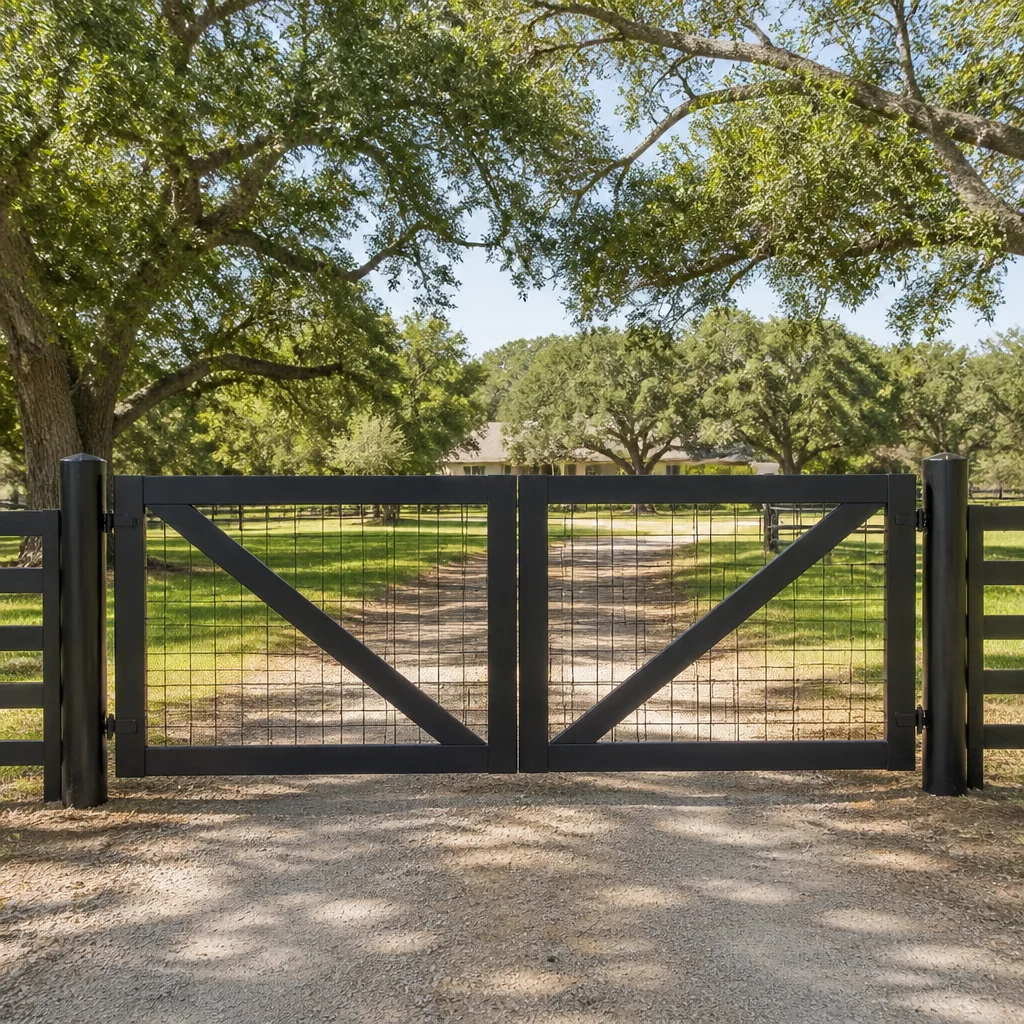 Farm & ranch
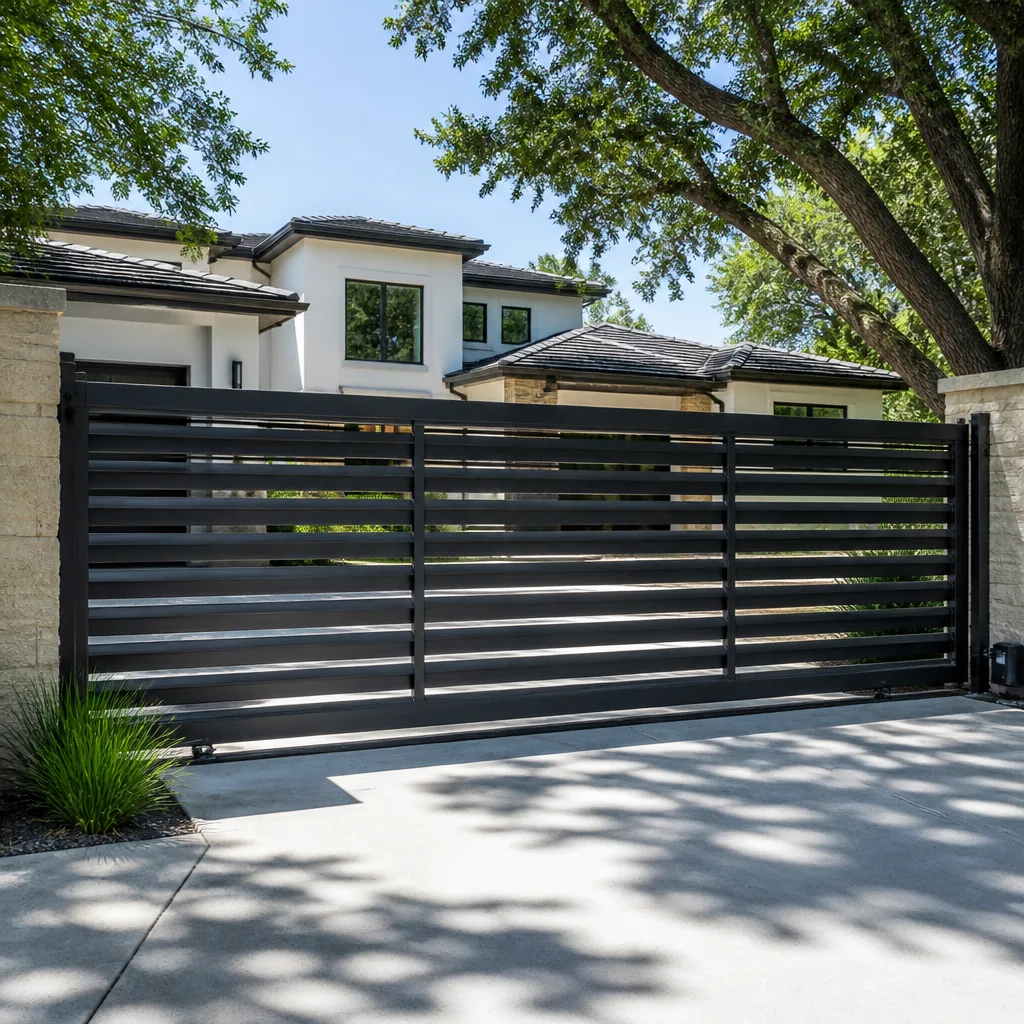 Sliding driveway gates
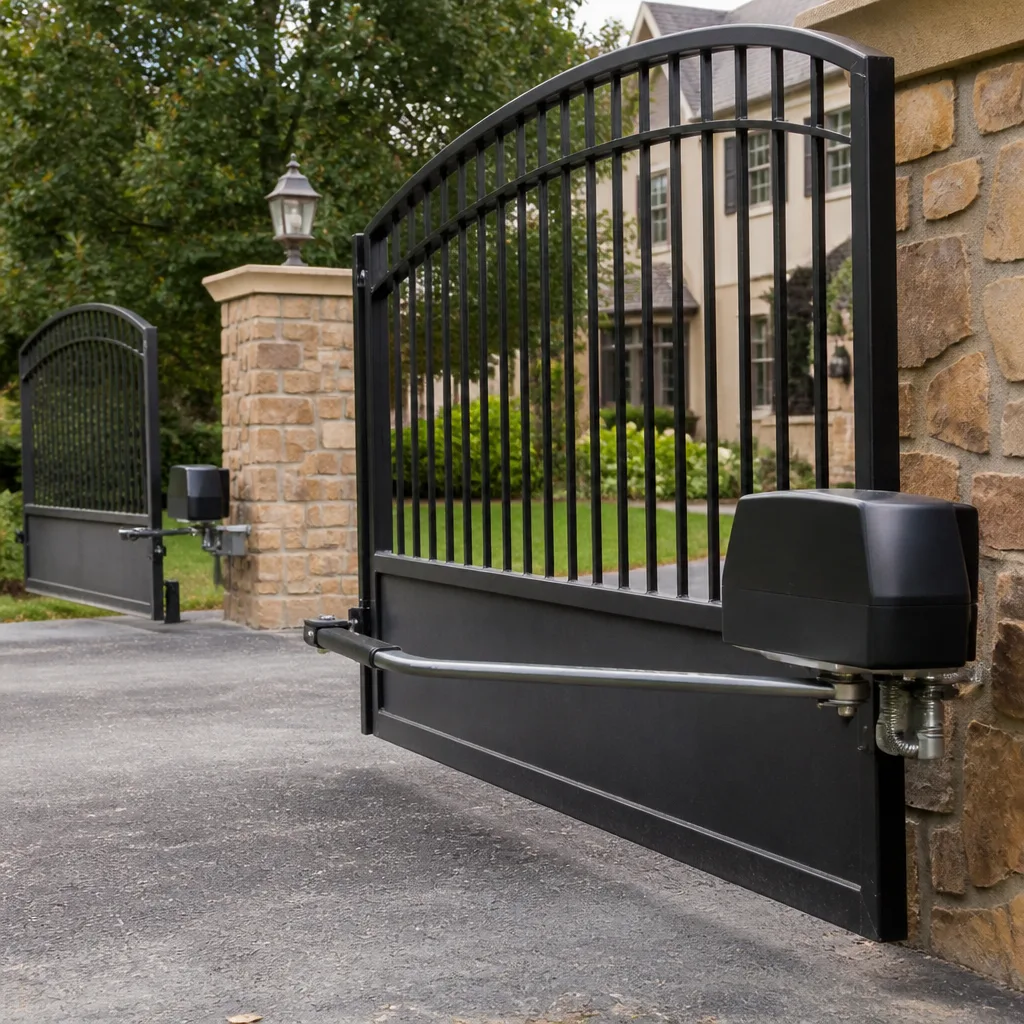 LiftMaster operators
Free on-site gate assessment - hinges, posts, and your LiftMaster or Nice gate operator checked before anything is quoted
The assessment is free and the quote is the invoice.
Get your free estimateThe Complete Guide to Gate Repair in Northbrook
A gate that reverses before it closes isn’t a “gate problem.” It’s almost always an obstruction sensor reading a false signal, or a limit switch that’s drifted out of position. Those are two different failures in two different layers of the system, and confusing them is how people end up paying for a control board they didn’t need. Most gate failures we diagnose in Northbrook trace back to one of four layers: mechanical, electrical, control board, or access hardware. This guide maps every common failure to its layer, shows you what a real diagnosis looks like versus a parts-swap guess, and tells you exactly what to have ready before a technician pulls into your driveway. By the end, you’ll know your gate better than most people who’ve owned one for a decade.
Quick Answer
Gate repair in Northbrook usually means one of four things: a mechanical fault (misaligned hinges, a sagging swing gate, a slide gate off its track), an electrical fault (dead transformer, failed battery, bad wiring), a control board failure (reversed logic, burnt relays, corrupted limits), or an access hardware issue (keypad, intercom, or loop detector not talking to the operator). The right repair depends entirely on which layer is failing. A technician who diagnoses by component, not by symptom, fixes it once. A technician who guesses replaces parts until the gate happens to work again.
Styles & brands we work with
- Wrought iron
- Wood & steel frame
- Farm & ranch
- Sliding driveway gates
- LiftMaster operators
Table of Contents
- The Four-Layer Diagnostic Framework
- How Northbrook’s Clay Soil Misaligns Swing Gates
- Brand-Specific Failure Patterns: LiftMaster vs. Mighty Mule
- Real Fix vs. Temporary Patch: The 90-Day Test
- Access Control: The Layer Most Homeowners Overlook
- What to Have Ready Before a Technician Arrives
- Commercial and HOA Gate Systems in Northbrook
- Repair or Replace? How to Decide
The Four-Layer Diagnostic Framework
Every gate system, from a residential Mighty Mule single-swing to a commercial DoorKing slide gate at a Northbrook office park, breaks down into four layers. Understanding them is the single most useful thing you can learn about your gate. When something goes wrong, the first question isn’t “what’s broken?” It’s “which layer is broken?”
Layer 1: Mechanical. Hinges, tracks, rollers, chains, latches, and the physical structure of the gate itself. Mechanical failures show up as sagging, dragging, binding, grinding, or a gate that physically won’t move even when you disengage the operator. If your gate swings freely by hand but won’t move under power, the mechanical layer is probably fine and the problem is upstream.
Layer 2: Electrical. Power supply, transformer, battery backup, wiring runs, and the motor itself. Electrical failures range from a tripped breaker to a buried wire chewed through by a rodent to a battery that won’t hold a charge. A gate that’s completely dead, or one that moves sluggishly and stalls halfway, usually points here.
Layer 3: Control board. The logic board inside the operator that tells the motor what to do based on inputs from limits, sensors, and remotes. Control board failures are the sneakiest because the gate may still move, just wrongly: reversing, stopping short, opening when it should close, or ignoring commands entirely. A board that’s been damaged by a power surge or a lightning-adjacent strike can behave in ways that look exactly like a mechanical problem.
Layer 4: Access hardware. Keypads, intercoms, card readers, loop detectors, phone-entry systems, and remote receivers. These don’t move the gate, they tell it when to move. An access failure looks like a gate that works perfectly from the internal button but won’t respond to your keypad code.
Here’s the diagnostic sequence a real technician runs, in order:
- Disengage the operator and move the gate by hand. If it binds, the mechanical layer is failing.
- Check incoming power at the operator with a meter. No power, no diagnosis past this point.
- Test the control board’s inputs one at a time: limits, safety edges, obstruction sensors, remote receiver.
- Test access hardware independently of the operator to confirm the signal is reaching the board.
Skipping step one is the most common mistake. We’ve seen operators replaced on gates that only needed a hinge adjustment. For an overview of how we approach gate repair, that framework is the foundation.
How Northbrook’s Clay Soil Misaligns Swing Gates
Northbrook sits on clay-heavy soil, and that single fact explains a surprising number of “motor problems” that turn out to be foundation problems. Clay expands when it’s wet and shrinks when it’s dry, and it does both dramatically across a Northbrook year. A gate post set into clay will move, subtly at first, then enough to matter. When the hinge post shifts even a fraction of an inch, the entire swing geometry changes. The gate starts to bind. The operator, sensing resistance, strains harder. Eventually it trips a safety limit, reverses mid-swing, or burns out a motor that was never the problem.
This is why a technician who only looks at the operator will misdiagnose a soil problem as an electrical one. The tell is simple: if the gate binds when moved by hand, the foundation and hinges are suspect, regardless of what the motor is doing. In Northbrook, that’s the first thing we check on any swing gate that’s started behaving oddly after a wet spring or a dry summer.
What a proper diagnosis looks like:
- Plumb and level check on both hinge and latch posts.
- Hand-cycle the gate through its full arc to feel for binding points.
- Inspect hinge wear and the gate frame for racking or sag.
- Check that the operator arm or actuator is aligned with the gate’s actual travel, not its original travel.
If the post has shifted, repacking and resetting it to proper footing depth solves the root cause. Adjusting the operator to compensate for a shifted post just postpones the failure and stresses the motor in the meantime. Slide gates in Northbrook deal with the same soil movement, though the symptom shows up as a track that’s no longer level rather than a swing that binds.
Brand-Specific Failure Patterns: LiftMaster vs. Mighty Mule
Brand matters more than most homeowners realize. A LiftMaster RSW12U and a Mighty Mule FM500 are both residential swing gate operators, but they fail in completely different ways, and a technician who doesn’t know the difference wastes your time and your money. We work on nine major gate brands, and the failure signatures are distinct enough that the brand alone narrows the diagnosis before anyone touches a meter.
LiftMaster operators (including the RSW12U) tend to fail at the control board or the battery first. The boards are sensitive to power events, and a Northbrook thunderstorm that causes a brief surge can corrupt the limits or reverse the logic. You’ll see a gate that opens fine but reverses on close, or one that stops at a random point in its travel. The mechanical components are usually robust; it’s the electronics that talk first.
Mighty Mule operators, by contrast, are entry-level residential units, and they tend to fail mechanically or at the actuator before the board gives out. The control boards on these units are simpler and more forgiving, but the actuators, limit switches, and battery systems take more abuse. A Mighty Mule that’s stopped working is more likely to have a dead battery, a failed limit switch, or a worn actuator than a fried board.
FAAC and BFT systems, common on Northbrook residential and light commercial gates, sit in the middle: robust Italian-engineered operators with boards that fail less often but are more sensitive to improper wiring and voltage drops. Linear and Viking units have their own patterns, usually around limit drift and receiver range.
The practical takeaway: when you call, tell the technician the brand and model. It cuts diagnosis time significantly, and it tells us whether the failure you’re describing matches the brand’s known pattern or points somewhere unexpected. For operator-specific work, our gate motor & opener service covers the full range.
Real Fix vs. Temporary Patch: The 90-Day Test
Here’s an uncomfortable truth about gate repair: a lot of “repairs” are patches that fail again within 90 days. The gate works when the technician leaves, works for a few weeks, then starts misbehaving in exactly the same way. The customer calls back, and the cycle repeats. That’s not repair. That’s parts-swapping with a lag.
The difference between a real fix and a patch comes down to whether the root cause was addressed or only the symptom. A few examples we see in Northbrook:
- Patch: Replacing a burnt-out control board without finding the wiring fault or surge source that killed it. The new board dies the same way.
- Real fix: Tracing the electrical fault, correcting it, then replacing the board.
- Patch: Adjusting the operator to compensate for a shifted hinge post. The post keeps moving and the operator keeps straining.
- Real fix: Resetting the post to proper footing depth, then re-aligning the operator to the corrected geometry.
- Patch: Replacing a battery that keeps dying without testing the charging circuit. The new battery dies too.
- Real fix: Testing the charger output and replacing the failed component, whether that’s the battery or the transformer.
The 90-day test is simple: if a repair hasn’t held for 90 days, the root cause wasn’t found. A real fix holds, because it addressed the layer that was actually failing. When you get an estimate, ask the technician to explain why the part failed, not just what part to replace. If the answer is vague, you’re probably getting a patch.
Access Control: The Layer Most Homeowners Overlook
Access hardware is the layer that gets blamed for operator problems and operator problems get blamed for access failures. The confusion goes both ways. A keypad that won’t open the gate could be a bad keypad, a wiring fault, a programming issue, or a control board that’s stopped accepting external inputs. Without testing each link in the chain, you can’t know which it is.
In Northbrook, access control failures cluster around a few specific patterns:
- Keypads that fail after a wet winter. Moisture intrusion into the keypad housing causes intermittent codes or dead buttons.
- Intercoms that lose audio but still trigger the gate, or vice versa. Usually a wiring or power issue at the intercom, not the operator.
- Loop detectors that phantom-trigger, holding the gate open when nothing’s there. Typically a loop that’s been damaged by ground movement or settling.
- Remote receivers with reduced range. Often an antenna issue or interference, rarely the remotes themselves.
Commercial properties in Northbrook with DoorKing and Elite systems add another dimension: multi-unit entry, phone access, and building-level integration. These systems need a technician who understands both the access layer and the operator layer, because a failure in one often masks as a failure in the other. Our gate access control work covers keypads, intercoms, loop detectors, and entry systems as part of the same diagnostic framework, not as an afterthought.
What to Have Ready Before a Technician Arrives
You can cut diagnosis time roughly in half by having the right information ready before the technician shows up. This isn’t about making our job easier; it’s about getting your gate fixed faster and avoiding the back-and-forth that comes from missing details.
Have these ready:
- Brand and model. Check the operator housing for a label or plate. LiftMaster, FAAC, BFT, Linear, Viking, Ghost Controls, DoorKing, Elite, and Mighty Mule all have distinct model naming, and the model number tells us a lot.
- Exact symptom description. Not “it’s broken” but “it opens fine and reverses on close about three feet from the end” or “it won’t respond to the keypad but works from the inside button.”
- When it started. After a storm? After a power outage? After the ground got wet? After someone hit the gate? Timing narrows the layer fast.
- What you’ve already tried. New batteries, reset breaker, different remote, re-entered keypad code. Each tells us what’s already been eliminated.
- Access to the operator and any control panels. If the operator is in a locked shed or the access panel is behind a gate, have keys ready. Unlocking cuts 10-15 minutes of the visit.
- Photos of the gate from multiple angles. A 15-second video of the gate failing is worth more than a five-minute phone description.
If you don’t know the brand, don’t worry. A technician can identify it on arrival. What matters most is the symptom description and the timing. Those two pieces of information map directly to the four-layer framework, and they’re the difference between a 20-minute diagnosis and a 60-minute one.
Commercial and HOA Gate Systems in Northbrook
Commercial and HOA gates in Northbrook face different pressures than residential gates. Higher cycle counts, multiple users, tighter access control integration, and the cost of a gate being down during business hours all change the repair calculus. A residential gate that opens 10 times a day has very different wear patterns than a commercial gate that opens 200 times a day, and the failure distribution across the four layers shifts accordingly.
Higher cycle counts push mechanical failures to the front. Rollers, chains, hinges, and tracks on a high-cycle gate wear faster than the electronics, and the maintenance interval between failures is shorter. Access control systems on commercial gates (DoorKing, Elite) add complexity because a single failure can lock out dozens of users, so diagnostic speed matters more. We work on both residential and commercial systems with the same brand-level approach, because a commercial BFT operator and a residential BFT operator share enough design language that the diagnostic logic transfers.
For HOA gates, there’s an extra layer: multiple stakeholders. A board, a management company, and residents all need to be informed of what’s wrong and what it will cost. A clear, component-level diagnosis helps there too, because it lets the HOA explain the repair to residents in plain language instead of vague “the gate is being fixed.”
Repair or Replace? How to Decide
Repair is usually the right call, but not always. A few guidelines help you decide which side of the line you’re on:
- Repair if the gate structure is sound, the operator is serviceable, and the failure is in a replaceable component (board, battery, hinge, sensor, keypad).
- Replace the operator if the unit is beyond its service life, the motor is failing repeatedly, or parts are no longer available for the model.
- Replace the gate if the frame is rusted through, the hinge posts have shifted beyond correction, or the gate is structurally compromised.
- Repair, then replace later if the gate has multiple failing layers simultaneously. Fix the urgent one now, budget the replacement for when it’s economically sensible.
In Northbrook, the clay soil pushes more repair decisions toward post work and re-alignment than in areas with sandy or rocky ground, because post shifting is more common here. A gate that’s structurally sound and just misaligned is a repair, not a replacement, even if the symptom feels severe. Getting a proper diagnosis before deciding is the only way to know which side of the line you’re on. For new gate work or full replacement, our Gate Repair Northbrook team handles installation alongside repair so the same diagnostic standard carries through.
Common Mistakes to Avoid
- Assuming the motor is the problem. The motor is the least common failure point in a gate system. Control boards, batteries, and mechanical alignment fail first. A dead motor diagnosis without a meter reading is a guess, not a diagnosis.
- Replacing the control board without finding why it failed. A new board will die the same way if the underlying wiring or power issue isn’t corrected. Always test the electrical layer before replacing the board.
- Adjusting the operator to compensate for a shifted post. Northbrook’s clay soil shifts posts, and cranking the operator to match a misaligned gate just adds strain to the motor. Reset the post, then re-align the operator.
- Skipping the hand-cycle test. Disengage the operator and move the gate manually before touching anything electrical. If it binds by hand, the mechanical layer is failing and no amount of electronic diagnosis will find it.
- Treating a keypad failure as an operator failure. If the internal button works and the keypad doesn’t, the access layer is the problem. Test the access hardware independently before assuming the operator is at fault.
- Ignoring a phantom-triggering loop detector. A loop that holds the gate open when nothing’s there isn’t a “quirk.” It’s a failing loop, and it will eventually burn out the operator from constant cycling.
- Accepting a repair without asking why the part failed. If the technician can’t explain the root cause in plain language, the repair is a patch. Ask, and expect a specific answer.
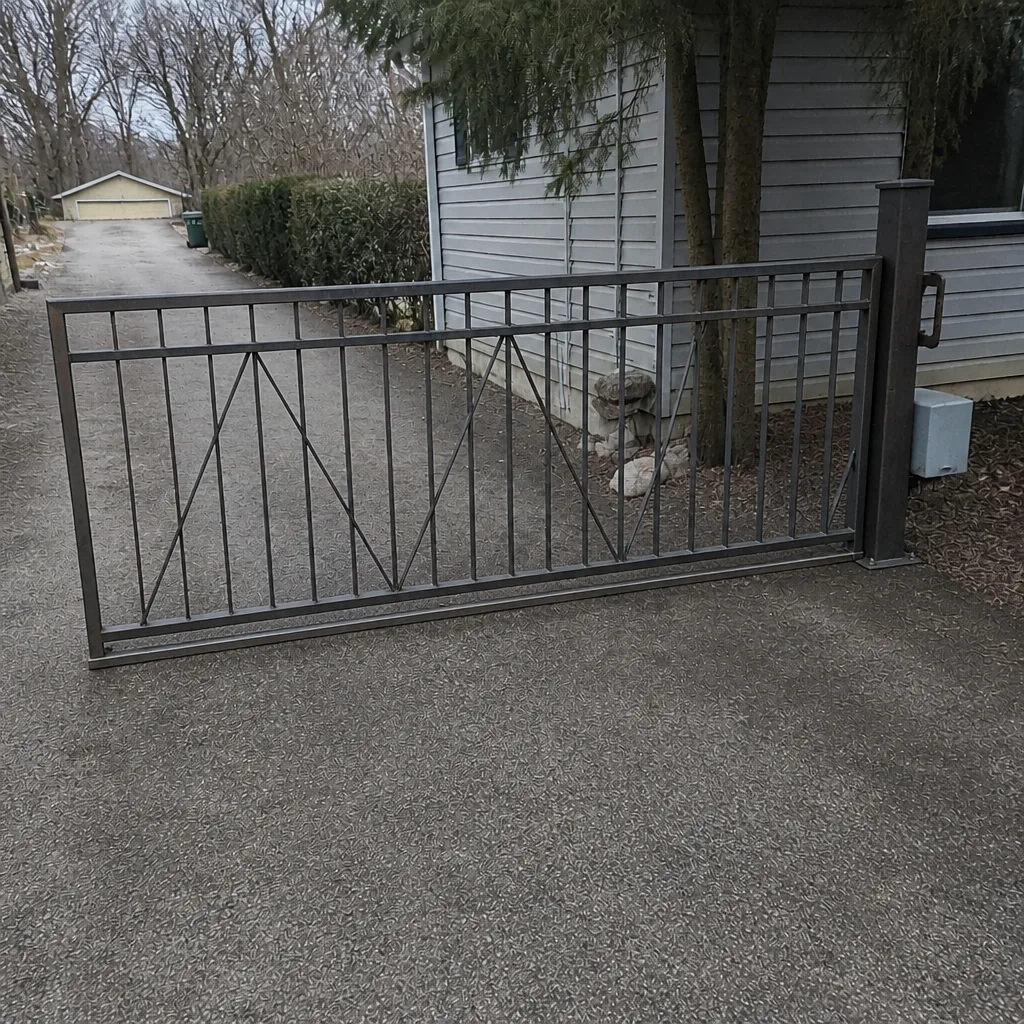
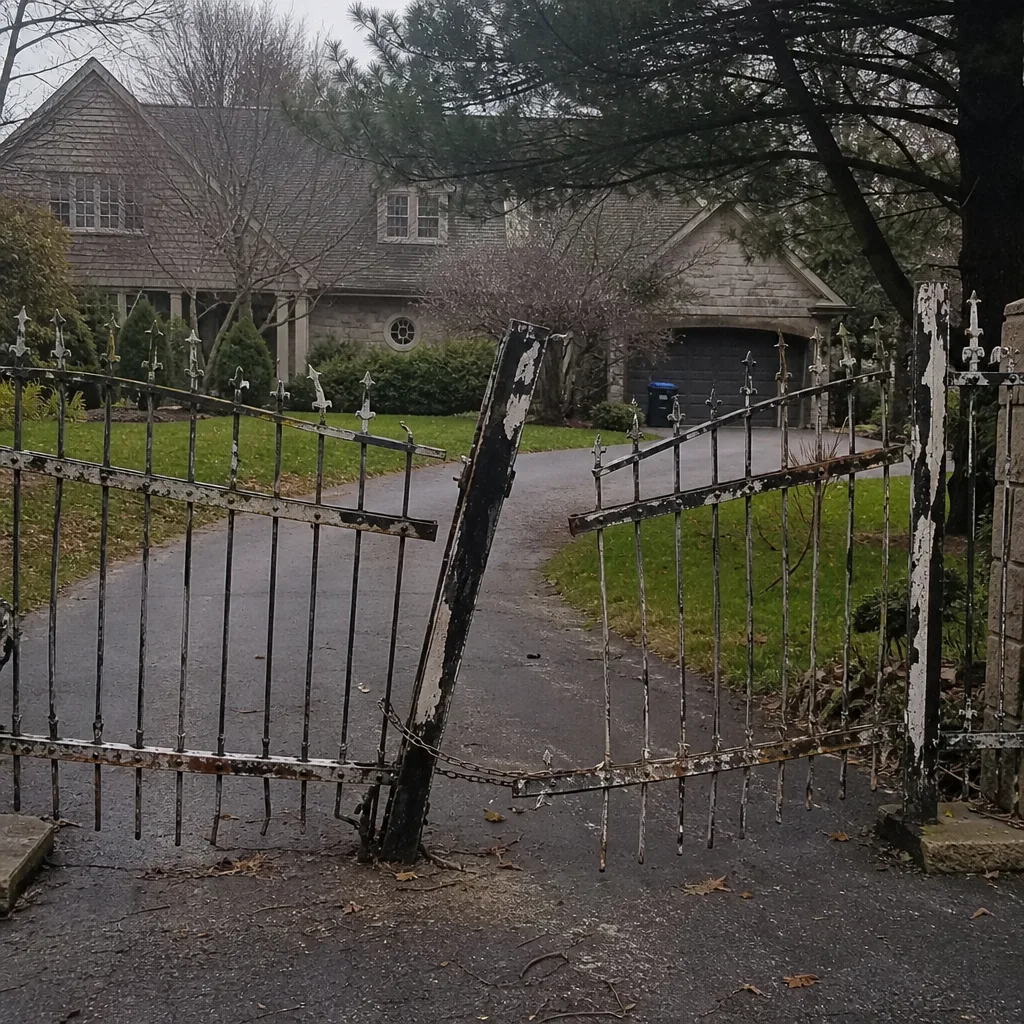
See the difference
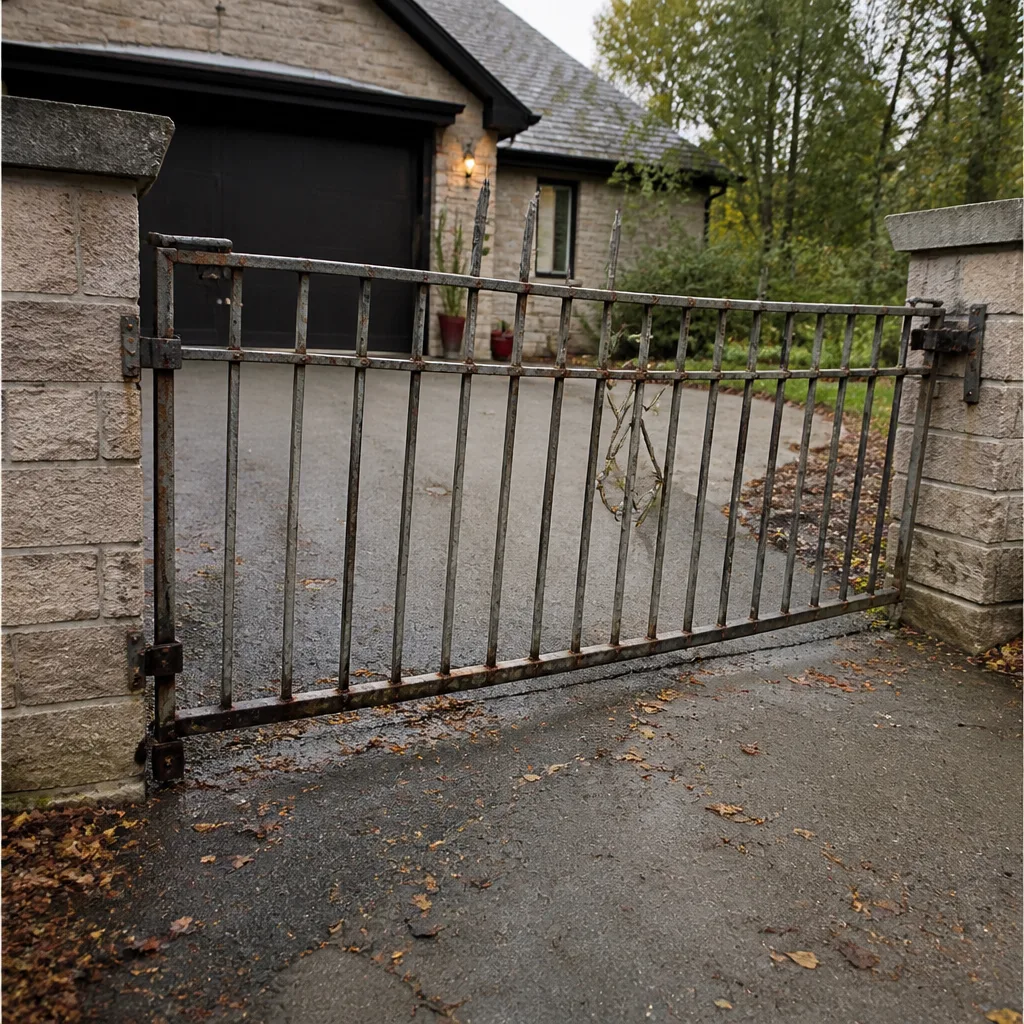 Before
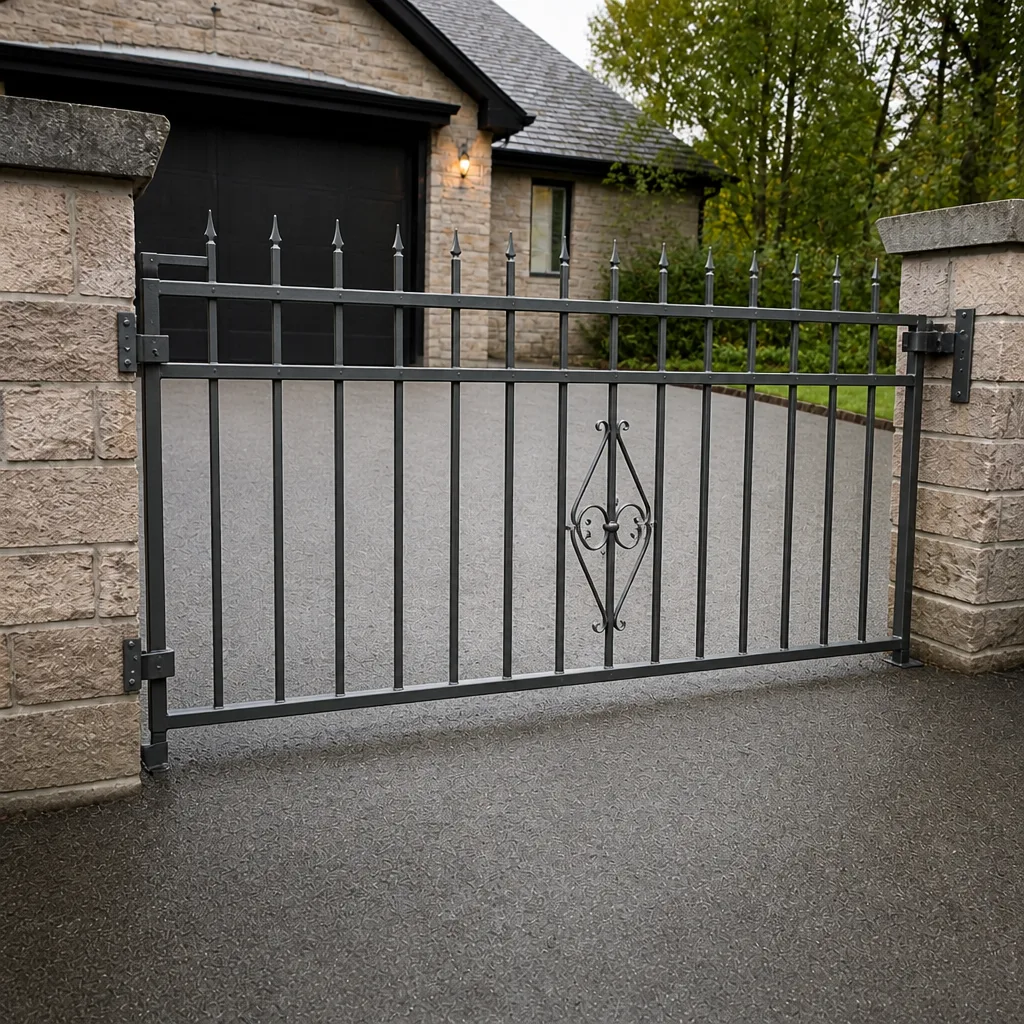 After
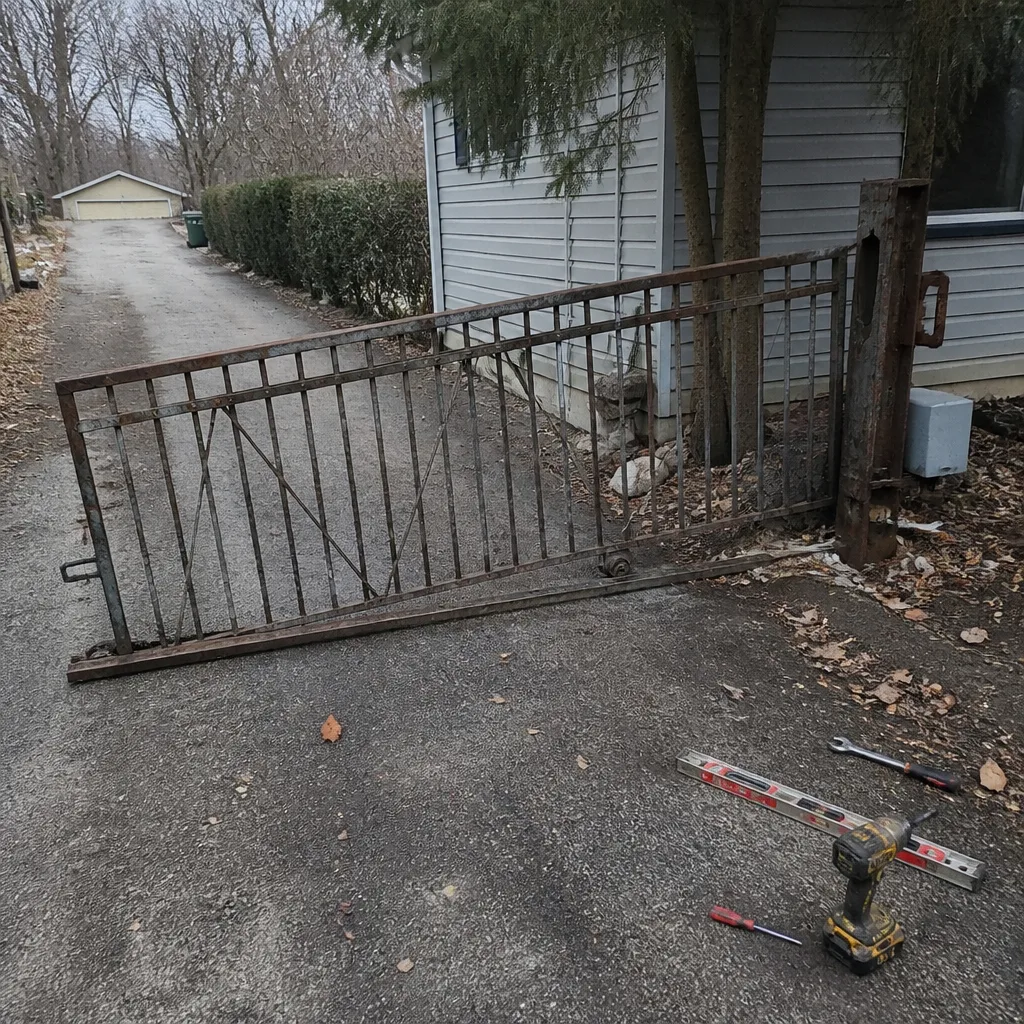 Before
 After
 Before
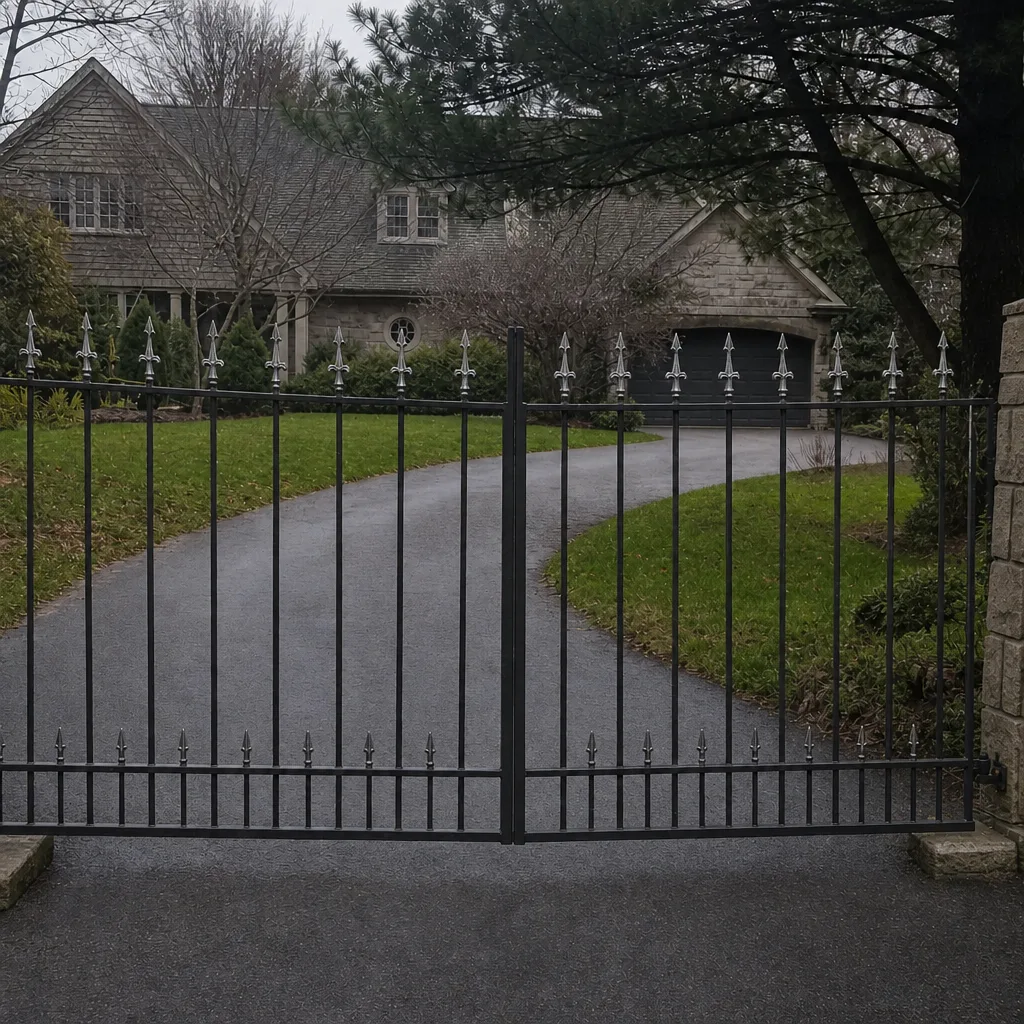 After
When to Call a Professional
Some gate problems are worth diagnosing yourself. Others aren’t. Call a professional if the gate is completely dead and you’ve confirmed the breaker isn’t tripped, if the gate moves but behaves erratically (reversing, stopping short, opening unprompted), if you see or smell burning at the operator or control panel, if the gate is binding when moved by hand and the post may have shifted, or if a commercial or HOA gate is down and multiple users are affected. The safety caveats matter here: gate operators carry high-torque motors, and access control systems involve line voltage. A gate that reverses unpredictably is an entrapment risk, especially with a slide gate or a heavy swing gate. Don’t stand in the path to “test” whether it will close. Treat a misbehaving gate as a safety issue, not a convenience issue, until it’s been diagnosed. Gate Repair Northbrook offers free estimates in Northbrook. Call (855) 701-7091.
Frequently Asked Questions
Gate repair in Northbrook typically ranges from about $150 for a simple sensor or limit adjustment to $600 or more for a control board replacement or motor service, depending on the brand and the layer of failure. Access control work and commercial systems sit at the higher end. Every job gets a written estimate before any work starts, and the estimate sets the final price. Call (855) 701-7091 for an exact quote; estimates are free.
Yes. We work on LiftMaster, FAAC, BFT, Linear, Viking, Ghost Controls, DoorKing, Elite, and Mighty Mule across residential and commercial applications. Brand-specific diagnostics matter because each brand has known failure patterns, and we diagnose at the component level rather than guessing. Tell us the brand and model when you call and we’ll confirm the approach.
A gate that reverses before closing is almost always an obstruction sensor reading a false signal or a limit switch that’s drifted out of position. On LiftMaster units it can also be a control board issue after a power event. The only way to know which is to test each input independently. Don’t replace the board until the sensor and limits have been ruled out. Call (855) 701-7091 and describe the exact point in travel where it reverses.
That pattern points to the access hardware layer, not the operator. The gate moves fine because the operator and control board are working. The problem is in the keypad, its wiring, or the receiver. In Northbrook, wet winters often cause moisture intrusion into keypad housings, which produces intermittent codes or dead buttons. Test the keypad wiring first before assuming the operator needs service. Call (855) 701-7091 for a diagnosis.
Most residential gate repairs in Northbrook are diagnosed and completed within a single visit, typically 1-3 hours depending on the failure. Control board replacements and access control work can take longer. Commercial and HOA gates with multiple failing layers may need a follow-up visit once parts are confirmed. The written estimate before work starts will include the expected timeline.
Usually not. A shifted post in Northbrook’s clay soil is a foundation issue, not a gate replacement issue. Resetting the post to proper footing depth and re-aligning the operator to the corrected geometry fixes the problem in most cases, and it’s significantly less expensive than a new gate. The gate itself only needs replacing if the frame is structurally compromised. Call (855) 701-7091 for an on-site assessment.
The Bottom Line
Most gate failures in Northbrook trace to one of four layers: mechanical, electrical, control board, or access hardware. Knowing which layer is failing before you call anyone saves time, money, and unnecessary part replacements. The four-layer framework, the brand-specific failure patterns, and the 90-day real-fix test in this guide give you the vocabulary to ask the right questions and recognize a proper diagnosis. Brand matters, component-level testing matters, and a written estimate before work starts is non-negotiable. If your gate is misbehaving, describe the symptom, name the brand if you know it, and get a diagnosis at the component level. Call (855) 701-7091 for a free estimate in Northbrook.
Written by the team at Gate Repair Northbrook.